Pasta making class: Mani in Pasta
from€100 per person
Book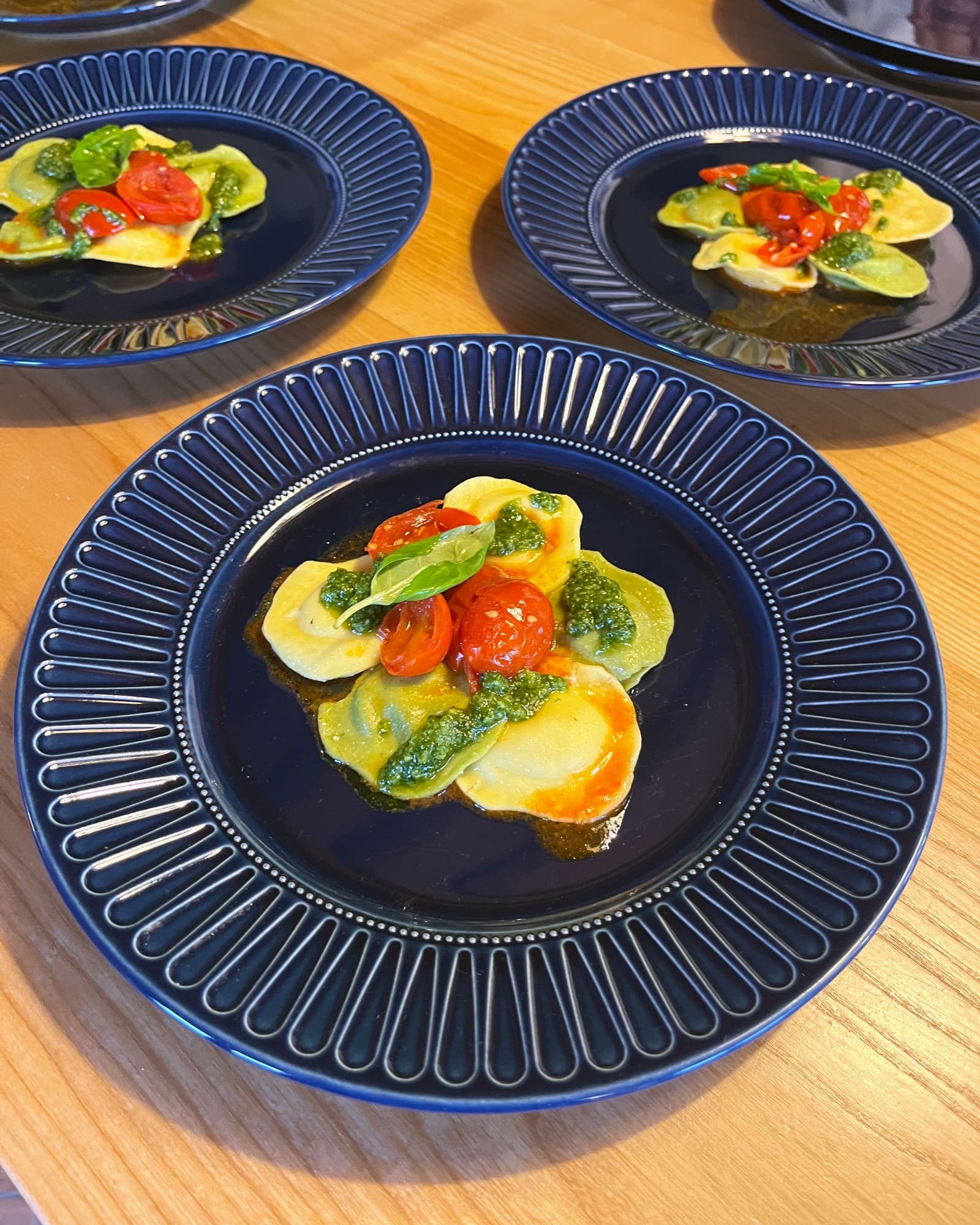
Four families of fresh pasta, and you choose two or three
Fourteen shapes, sorted into four families: long egg shapes, filled egg shapes, shapes made without egg, and gnocchi. You choose two of them or three, and the number is the only thing that changes the price. The choice is free, so you can cross three families or stay inside one.
Egg pasta, the long shapes
- TagliatelleThe egg sheet rolled up and cut into ribbons about a centimetre wide.
- MaltagliatiThe offcuts of the sheet, cut irregular on purpose: no two the same.
- TaglioliniLike tagliatelle but far narrower, which means they cook in a minute.
- PappardelleRibbons three fingers wide, the shape that stands up to long meat sauces.
Egg pasta, the filled shapes
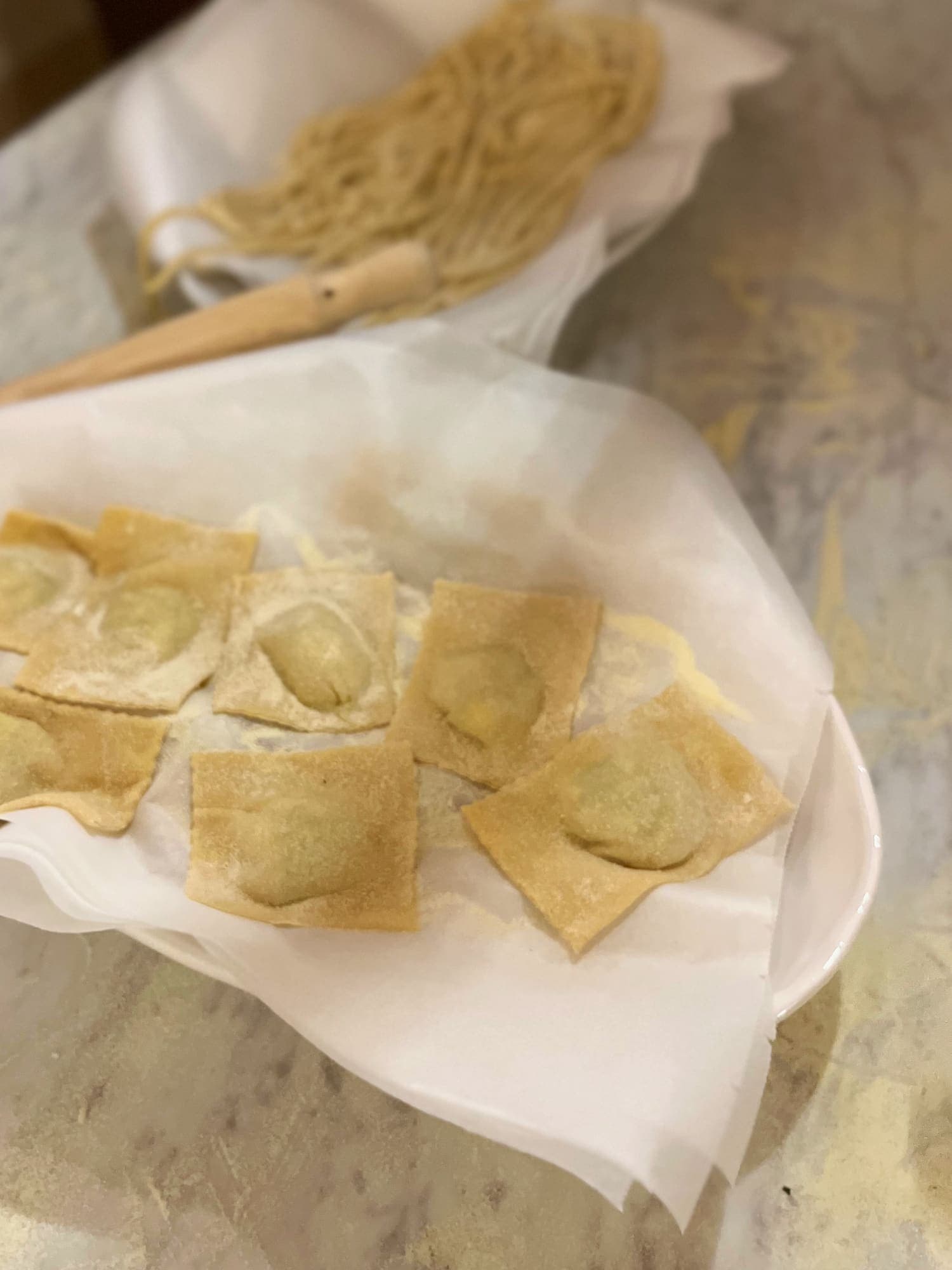
- Ravioli maremmaniSquares closed one at a time, with the ricotta and greens filling used in the Maremma.
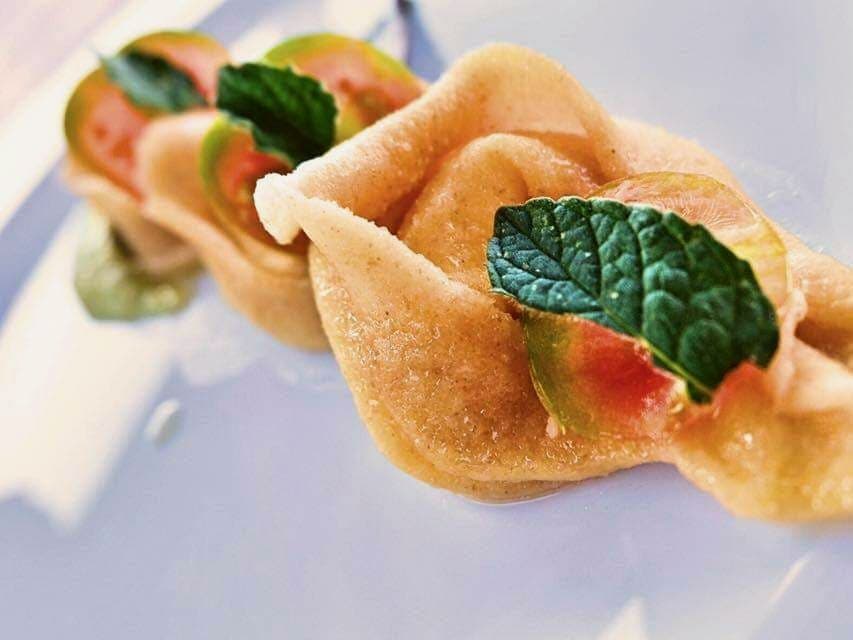
- TortelliniThe smallest and the hardest shape: closed around a fingertip, and the hand takes a while to learn it.
- TortelloniThe same movement as tortellini on a much larger square, so it is learned faster.
Pasta without egg
- PiciFlour and water, every strand rolled by hand between the palms: Siena's own pasta.
- FarfalleSmall rectangles pinched in the middle one by one: a shape children can do.
- OrecchietteDragged across the board with a thumb and turned inside out: a Puglian movement, and it takes practice.
- ScialatelliA short, thick southern shape, cut with a knife.
Gnocchi
- Gnocchi di patatePotatoes boiled and mashed while hot, very little flour: the less you use, the softer they stay.
- Gnocchi di ricottaNo potato, quicker and lighter, ready in half an hour.
- Gnocchi di semolinoThe Roman kind: semolina cooked in milk, spread, cooled and cut into discs to be browned in the oven.
You choose the class, then how many preparations to make, two or three, then which ones. With three shapes you can cross three of the four families, or stay inside one: the choice is free. The number is the only thing that changes the price; which ones you pick does not change it. Preparations are not mixed between classes: these are three separate experiences, and pasta and tiramisù do not get combined into one class. If you want both, they are two bookings.
What you actually learn
What you take home is a pair of hands that know the dough. You learn the real proportions, how much flour and how many eggs, and why a dough without egg asks for a different hand. Then you learn the movements: rolling out a sheet, closing a filled shape, dragging a small one across the board. Each movement gets corrected while you are doing it, not afterwards.
Fourteen shapes, four families, your own hands.
Making pasta by hand is a skill you can learn in one afternoon and never forget. There is no fixed programme here: there is a list of fourteen shapes in four families, and you choose two or three of them. The long egg shapes are tagliatelle, maltagliati, tagliolini, pappardelle: one sheet of dough, four different cuts. The filled egg shapes are ravioli maremmani, tortellini, tortelloni, where what changes is not the cut but the way you close them. The shapes without egg are pici, farfalle, orecchiette, scialatelli: flour and water, and hands doing all the work. Gnocchi come from potato, from ricotta or from semolina, three different doughs that share one name. The choice is free: you can cross three families or stay inside one. Everything is included: Roberto buys and brings all the ingredients for the lesson. He also brings the stations, the tools and the pasta machine, and while you work he shows a few of the sauces he usually puts with those shapes.
Egg pasta, the long shapes: tagliatelle, pappardelle, tagliolini, maltagliati
One sheet of dough, four different cuts, and each cut behaves differently on the plate. Tagliatelle are ribbons about a centimetre wide; pappardelle are three fingers across and built for long meat sauces; tagliolini are so narrow they cook in a minute; maltagliati are the offcuts, cut irregular on purpose.
Filled pasta: ravioli maremmani, tortellini, tortelloni
Here what you learn is not a cut but a closure. Ravioli maremmani are squares with the ricotta and greens filling used in the Maremma. Tortellini are the smallest and hardest shape, closed around a fingertip. Tortelloni are the same movement on a much larger square, which is why most people learn them first.
Pasta without egg: pici, farfalle, orecchiette, scialatelli
Flour and water, and hands doing all the work. Pici are Siena's own pasta, every strand rolled between the palms. Farfalle are small rectangles pinched one by one, which children can do. Orecchiette are dragged across the board with a thumb. Scialatelli are short, thick and cut with a knife.
Gnocchi: potato, ricotta, semolino
Three different doughs that share one name. Potato gnocchi are mashed hot with very little flour, because the less you use the softer they stay. Ricotta gnocchi skip the potato and are ready in half an hour. Gnocchi di semolino are the Roman kind: semolina cooked in milk, cooled, cut into discs and browned.
How the afternoon goes: the four stages
3 hours
The class itself lasts about three hours: that is the part you are actually in. The chef is in the house longer than that, about six hours in total: he arrives in the afternoon and prepares before you start, and afterwards he clears the kitchen and the equipment he used. You do not need to be there for those hours, and they do not cost you anything extra.
Four stages, and in this one the wait is a rest rather than a rise: the dough sits, and that is all it needs. The afternoon is mostly hands, one shape at a time, and the second shape is started while the first is resting. Because fresh pasta cooks in minutes, the end arrives quickly once the water is on. About three hours in all, from the first sheet to the last plate.
Introduction: the real proportions
You start from the real proportions: how much flour, how many eggs, and why a dough without egg needs a different hand. Roberto shows the shapes you chose, one by one, and says what makes them different from each other.
Preparation: the dough, the shapes you chose
You mix by hand on the worktop, work the dough until the texture changes, then roll it out: with a pin or with the pasta machine, which Roberto brings. Each shape has its own movement, and the movement gets corrected while you are doing it.
The wait: the dough rests
The dough rests, and that is the moment where everyone sits down and talks. Meanwhile the second shape gets started, and Roberto shows a few of the sauces he usually puts with those pastas.
Tasting: short cooking, straight to the table
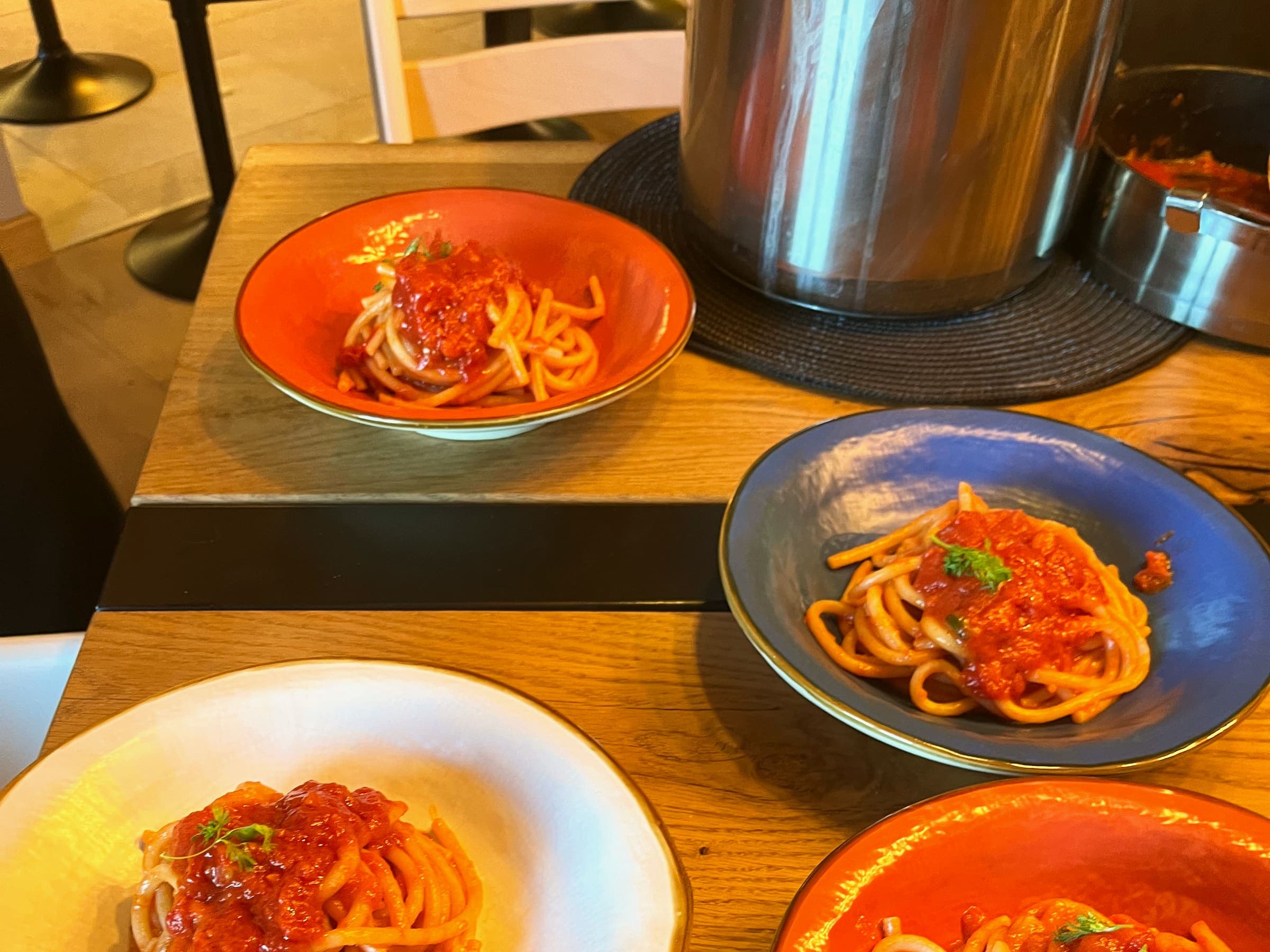
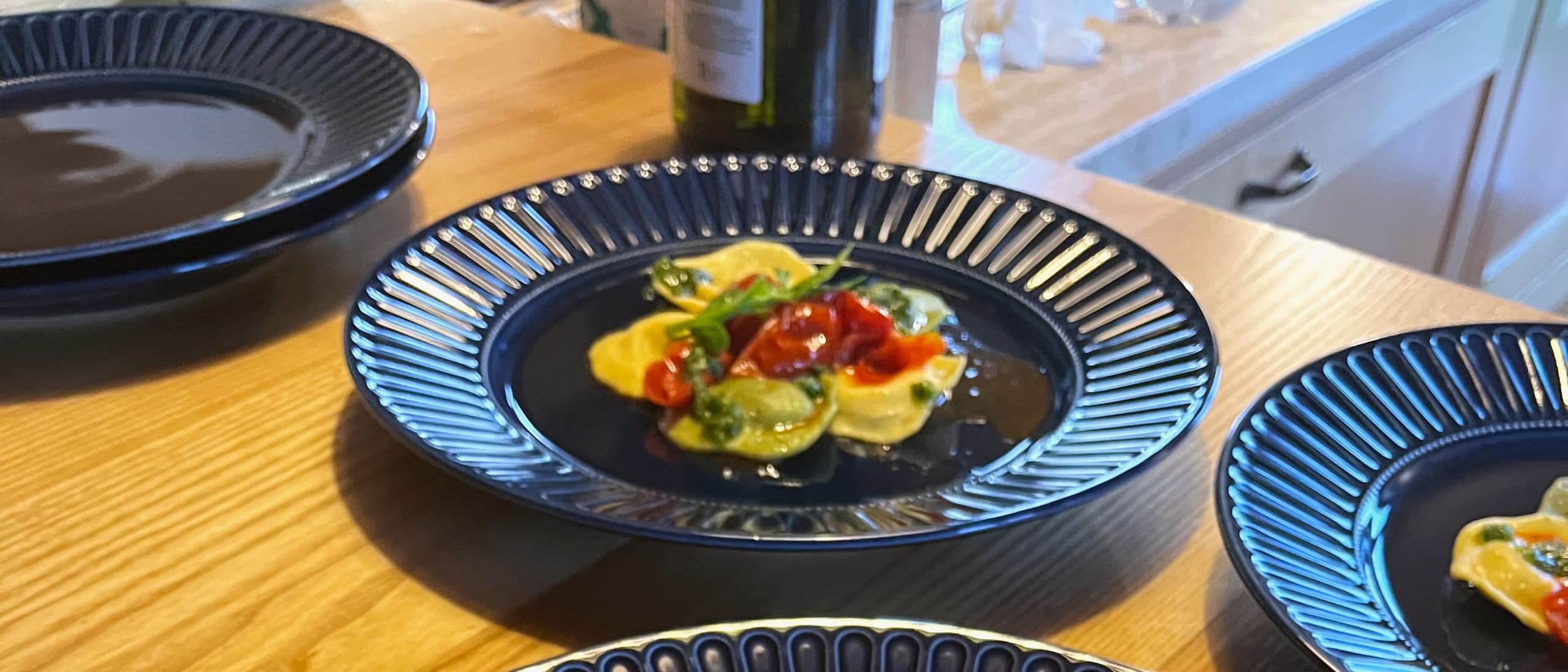
Fresh pasta cooks in a couple of minutes, so it is eaten the moment it is ready, one shape at a time. You taste the difference between what you made and what the person next to you made. Whatever is left over stays with you.
What you eat at the end
Fresh pasta cooks in a couple of minutes, so it is eaten the moment it is ready, one shape at a time. You taste the difference between what you made and what the person next to you made. Whatever is left over stays with you.
What you need to know before booking
You get your own station and your own tools, an apron for the afternoon, and a chef's hat to keep. The recipes are printed and yours to take: the ones you made that day, with the proportions that actually work written down.
No experience is needed and there is no minimum age. Children do everything the others do, helped by Roberto and their parents; knives, the hob and the oven stay with the adults.
At the end Roberto signs a certificate of participation for each of you. It states that you were here and what you did. It is not a professional qualification and it does not certify skills.
From 2 guests
Up to 25 guests
More than 25? Send a personal request: Roberto reads it and answers himself.
What it costs: two or three preparations
from€100 per person
Minimum €500
| 2-4 | 5-8 | 9-16 | 17-25 | Minimum | |
|---|---|---|---|---|---|
| Two preparations | €155 | €125 | €110 | €100 | €500 |
| Three preparations | €170 | €140 | €125 | €110 | €500 |
Two preparations
2-4 guests€1555-8 guests€1259-16 guests€11017-25 guests€100Minimum€500Three preparations
2-4 guests€1705-8 guests€1409-16 guests€12517-25 guests€110Minimum€500
You choose the class, then how many preparations to make, two or three, then which ones. The number is the only thing that changes the price, and the service minimum is the same for both rows.
The price includes menu planning, preparation at the villa, the class, and cleaning of the kitchen and equipment used. Everything is included: Roberto buys and brings all the ingredients for the lesson. Drinks, wine, flowers, rentals and table styling are separate. When requested, we can introduce an independent local supplier who will confirm their own price, terms and invoice directly with you.
The questions we get asked about the pasta class
- Do we need any experience?
- No, and there is no minimum age. Children do everything the others do, helped by Roberto and their parents; knives, the hob and the oven stay with the adults. Roberto has taught this to people who had never made pasta before, which is most of the people who book it.
- Is it all by hand, or do you bring a machine?
- Both. Roberto brings the pasta machine for rolling sheets, along with the stations, the tools and an apron each. Pici, orecchiette and gnocchi are made entirely by hand, because that is the only way those shapes exist.
- Can we make pasta without egg?
- Yes: it is one of the four families. Pici, farfalle, orecchiette and scialatelli are flour and water, no egg at all, and you can choose all three of your preparations from that family if you want to.
- How long does the dough rest, and what happens meanwhile?
- Resting is the third of the four stages. The dough sits, everyone sits down too, and meanwhile the second shape gets started. Roberto uses that time to show a few of the sauces he usually puts with the shapes you chose.
- Do we also make the sauces?
- The class is about the pasta: the shapes are what you make with your own hands. While you work, Roberto shows a few of the sauces he normally pairs with those shapes, chosen by him, so that what you taste at the end makes sense.
- Do we take home what we do not eat?
- Yes. Whatever is left over stays in the house, with you. The printed recipes and the chef's hat go home with each person, along with a certificate of participation.
Book this class
The other two classes
Tiramisù and Italian pastry class: seven things, you make two or three
Dolci di Casa