
Pizza making class: Pizza e Fuoco
from€100 per person
Book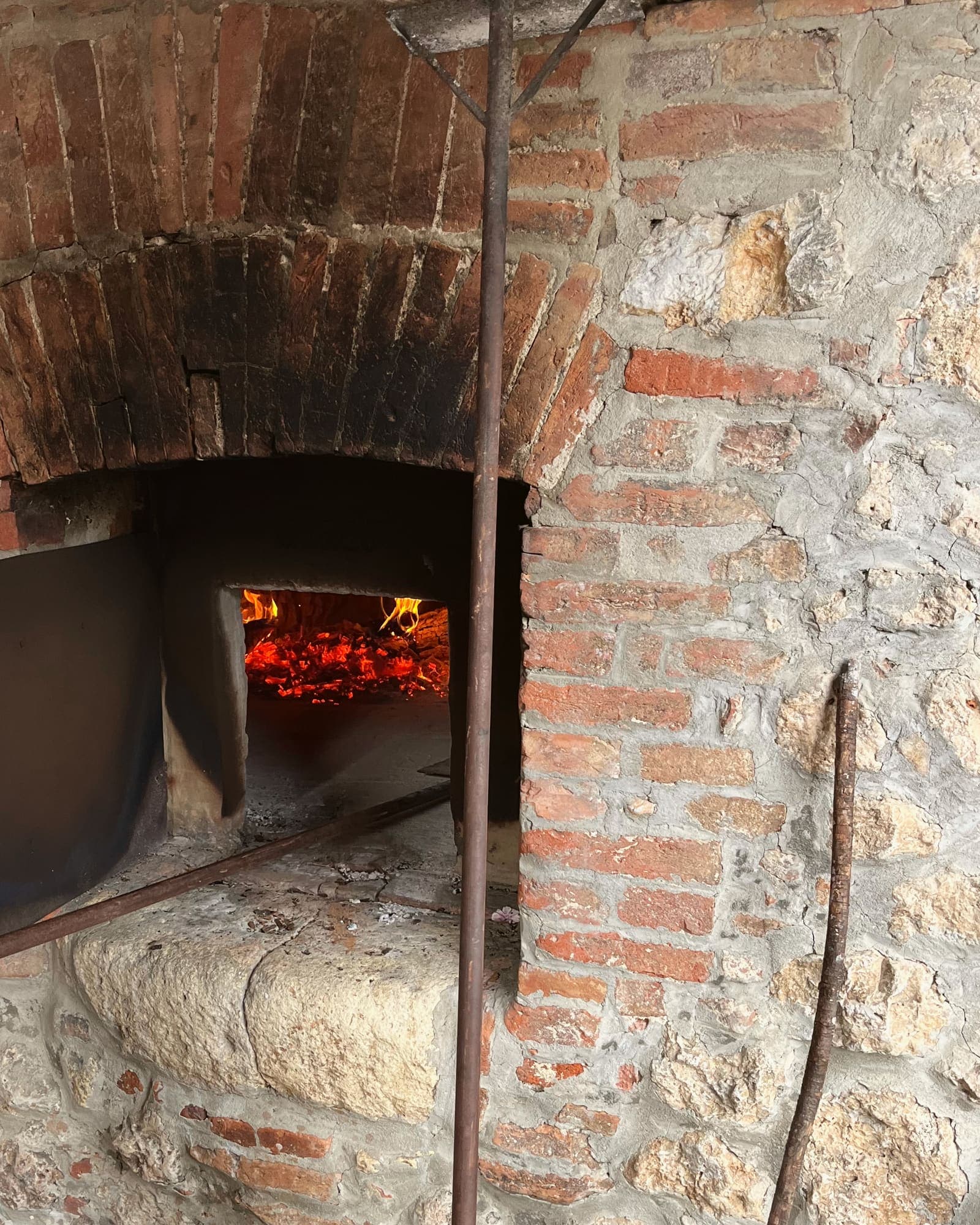
Three kinds of pizza, and you choose two or three
There are exactly three: pizza al piatto or in teglia, pizze fritte, pizze ripiene. You pick two of them, or three, and with three you make all of them. The number is the only thing that changes the price. Everyone works their own dough, so this is not a demonstration you watch.
The three kinds of pizza
- Pizza al piatto o in tegliaThe round pizza or the tray-baked one: which of the two depends on the oven in the house, and we tell you beforehand.
- Pizze fritteDough stretched, filled and fried instead of baked: it puffs in seconds and is eaten very hot.
- Pizze ripieneThe dough that closes over a filling and has to hold it through the bake: calzoni and other closed shapes.
You choose the class, then how many preparations to make, two or three, then which ones. With three in the pizza class you make all three kinds, because there are exactly three. The number is the only thing that changes the price; which ones you pick does not change it. Preparations are not mixed between classes: these are three separate experiences, and pasta or tiramisù do not get combined into a pizza afternoon. If you want both, they are two bookings.
What you actually learn
What you take home from this one is the dough. You learn what time does to it, how it should feel before it is stretched, how to close a filled pizza without tearing it, and what temperature the frying oil has to stay at. And you learn to read the oven you have, because that is what decides whether a pizza goes al piatto or in teglia.
Three different pizzas, and you choose how many to make.
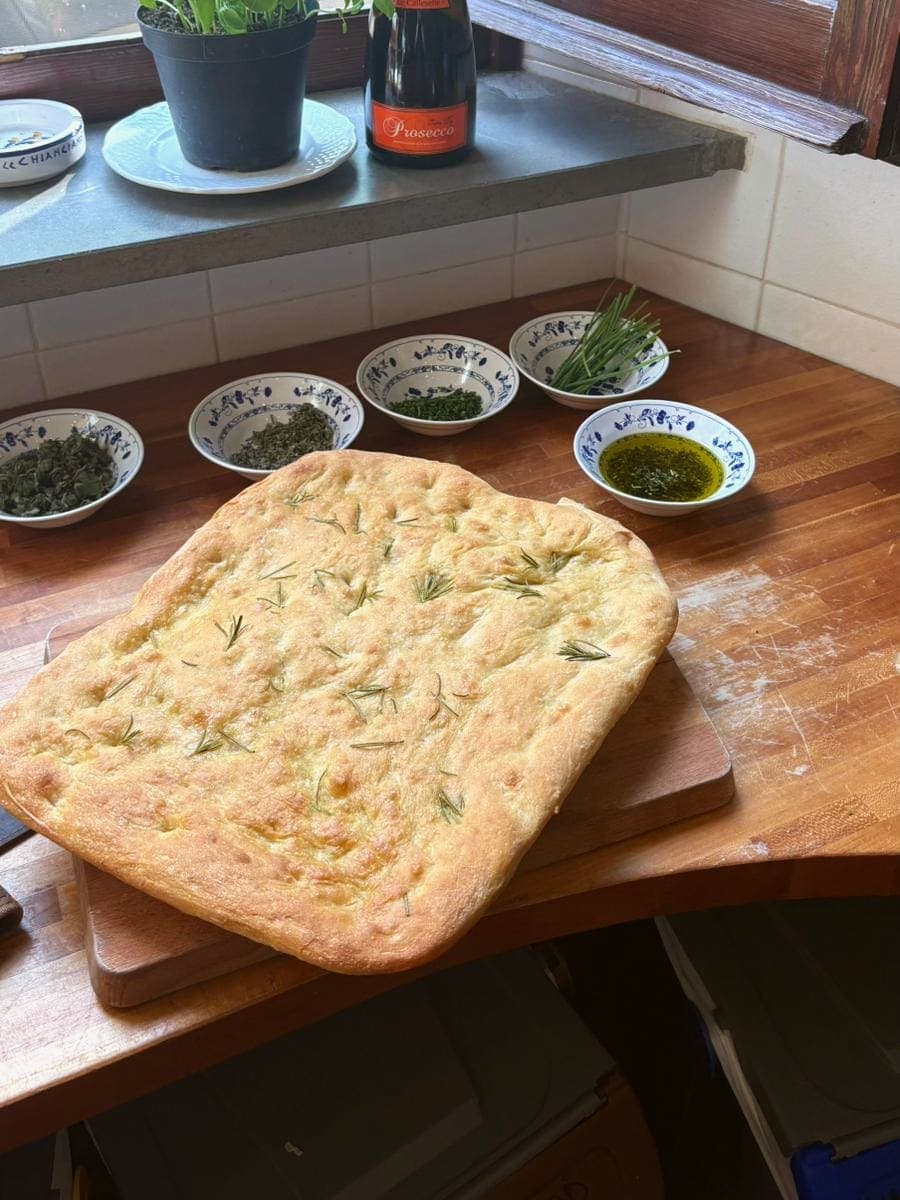
Three kinds of pizza, and the first decision is how many to make. Two preparations means you choose two; three means you make all of them, because there are exactly three kinds. Pizza al piatto and pizza in teglia are the same family seen from two sides, and which one you make depends on the oven in the house. We tell you before confirming. Pizze fritte are the ones nobody expects, and yes, they really are fried: it is cooking, and around Naples it has always been done this way. Pizze ripiene are the case where the dough changes job, because it has to close and hold a filling. Everything is included: Roberto buys and brings all the ingredients for the lesson. Everyone has their own station, their own dough and their own apron: that is one pizza each per kind, and if dough is left over you make more. While the dough proves, Roberto often makes a schiacciata or some bread to fill the wait. That is something he throws in, not one of the preparations you choose.
Pizza al piatto or in teglia: it depends on your oven
The round pizza and the tray-baked one are the same family handled two ways, and which one you make depends on the oven in the house you rented. A tray pizza forgives a domestic oven; a round one wants heat concentrated in one place. We look at photographs of your kitchen before confirming and tell you which of the two you will be making.
Pizze fritte, the ones nobody expects
Dough stretched, filled and dropped into oil instead of into the oven. It puffs in seconds, it is eaten immediately, and around Naples people have made it this way for as long as there has been pizza. Yes, we fry in a house kitchen: it is cooking, done with the oil at the right temperature and the pan watched.
Pizze ripiene, and why the dough changes
A filled pizza asks the dough to do a different job: it has to close over something wet, hold it through the bake and not tear. That changes how much you work it and how thin you go. It is the preparation where you understand why bakers talk about dough as if it had a character.
How the afternoon goes: the four stages
3 hours
The class itself lasts about three hours: that is the part you are actually in. The chef is in the house longer than that, about six hours in total: he arrives in the afternoon and prepares before you start, and afterwards he clears the kitchen and the equipment he used. You do not need to be there for those hours, and they do not cost you anything extra.
Four stages, and the third one is the reason the afternoon has this shape: dough proves at its own speed and nothing brings it forward. So the work comes first, in one block, and the waiting is used rather than endured. Everyone has their own station from the start, and everyone ends up with their own pizzas. It takes about three hours, from the first explanation to the last one out of the oven.
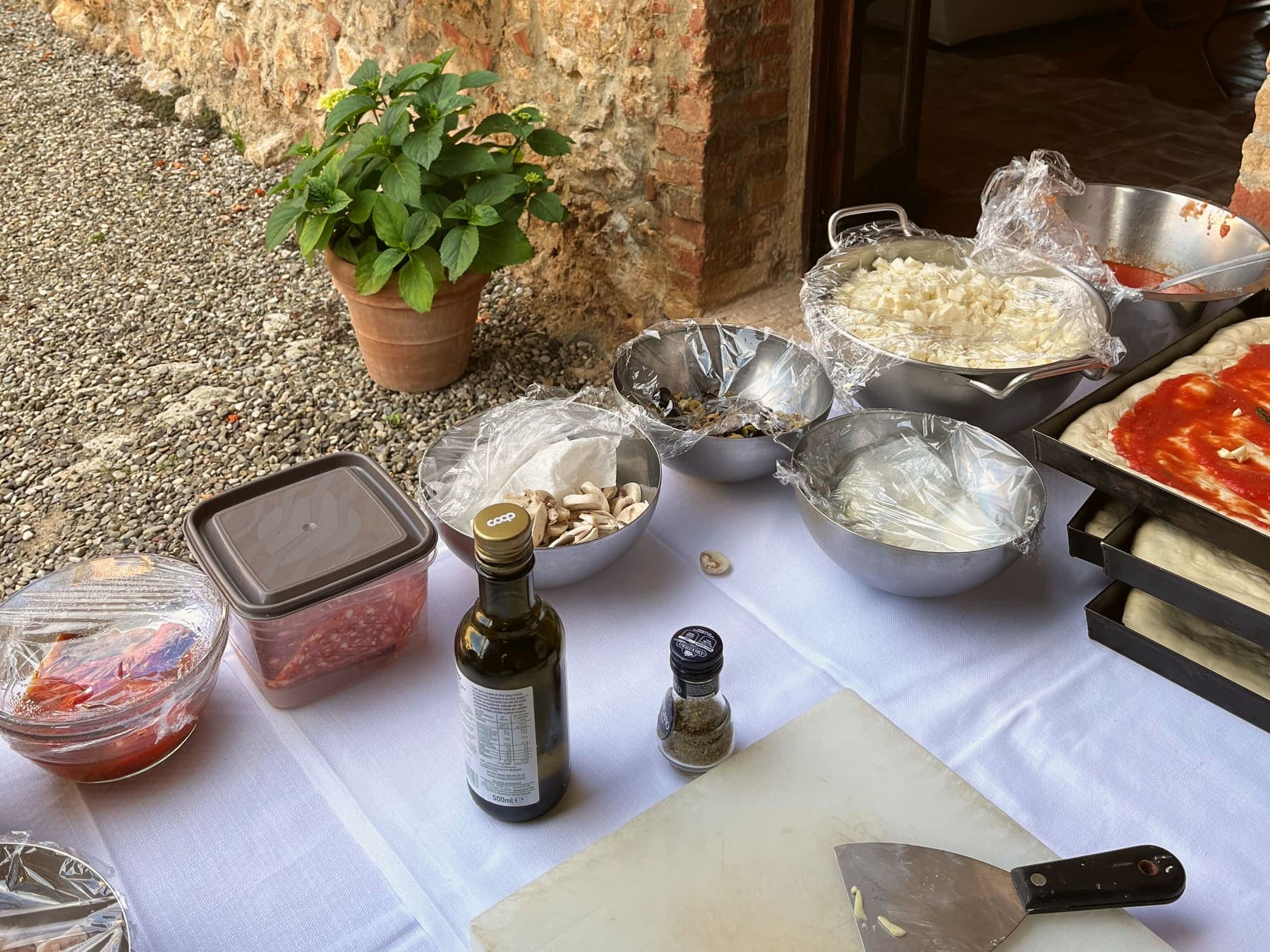
Introduction: what time does to flour
Roberto explains the thing that actually changes the result: what time does to flour. Then the dough is made right there, in the villa kitchen, and you look at the oven in the house to decide whether you go al piatto or in teglia.
Preparation: the dough and the three kinds
Everyone at their own station: the dough is divided, shaped into balls, stretched by hand. For the filled ones you learn to close without tearing; for the fried ones the oil goes on, and you learn what temperature it has to stay at.
The wait: the dough proves
Proving cannot be rushed. This is the part of the afternoon where you stand around together, put toppings out, get the rest ready, and where Roberto often puts a schiacciata or some bread in the oven so there is something to eat while you wait.
Tasting: hot, one after another
The pizzas come out one after another and are eaten hot, standing or sitting, whichever you prefer. Everyone recognises their own. Whatever is left over stays with you, in the house.
What you eat at the end
The pizzas come out one after another and are eaten hot, standing or sitting, whichever you prefer. Everyone recognises their own. Whatever is left over stays with you, in the house.
What you need to know before booking
You get your own station and your own tools, an apron for the afternoon, and a chef's hat to keep. The recipes are printed and yours to take: the ones you made that day, with the proportions that actually work written down.
No experience is needed and there is no minimum age. Children do everything the others do, helped by Roberto and their parents; knives, the hob and the oven stay with the adults.
At the end Roberto signs a certificate of participation for each of you. It states that you were here and what you did. It is not a professional qualification and it does not certify skills.
From 2 guests
Up to 25 guests
More than 25? Send a personal request: Roberto reads it and answers himself.
What it costs: two or three preparations
from€100 per person
Minimum €500
| 2-4 | 5-8 | 9-16 | 17-25 | Minimum | |
|---|---|---|---|---|---|
| Two preparations | €155 | €125 | €110 | €100 | €500 |
| Three preparations | €170 | €140 | €125 | €110 | €500 |
Two preparations
2-4 guests€1555-8 guests€1259-16 guests€11017-25 guests€100Minimum€500Three preparations
2-4 guests€1705-8 guests€1409-16 guests€12517-25 guests€110Minimum€500
You choose the class, then how many preparations to make, two or three, then which ones. The number is the only thing that changes the price, and the service minimum is the same for both rows.
The price includes menu planning, preparation at the villa, the class, and cleaning of the kitchen and equipment used. Everything is included: Roberto buys and brings all the ingredients for the lesson. Drinks, wine, flowers, rentals and table styling are separate. When requested, we can introduce an independent local supplier who will confirm their own price, terms and invoice directly with you.
The questions we get asked about the pizza class
- Do we need a wood-fired oven?
- No. We work with the oven that is already in the house, and that is what decides whether you make pizza al piatto or pizza in teglia. Before confirming we ask for photographs of the kitchen and a few practical facts about the hob, the oven, the fridge and the worktop.
- How long does the dough prove, and what do we do while we wait?
- Proving cannot be hurried, so the wait is one of the four stages rather than a gap in the afternoon. You get the toppings ready, you stand around together, and Roberto often bakes a schiacciata or some bread so there is something to eat meanwhile.
- How many pizzas does each of us make?
- One of each kind, each. If dough is left over, you make more: nobody stops at the first one. With three preparations chosen, that means one pizza al piatto or in teglia, one fritta and one ripiena per person.
- Can we fry in the villa kitchen?
- Yes. Pizze fritte are one of the three preparations, and frying is part of what we do: the oil goes to the right temperature, the pan stays watched, and the pizzas come out one at a time.
- Can we do it outside?
- Often yes, if there is a stable worktop, shade, power and the weather holds. We agree it in advance and keep the indoor option open, because dough does not care about your plans and the weather sometimes changes.
- Can we make it gluten free?
- Yes, and you tell us at checkout when you book, so Roberto brings the right flours and sets the worktop up for it. In a villa kitchen we cannot rule out all cross-contamination, and we say so in advance rather than reassure you and be wrong.
Book this class
The other two classes
Tiramisù and Italian pastry class: seven things, you make two or three
Dolci di Casa