
Tiramisù and pastry class: Dolci di Casa
from€100 per person
Book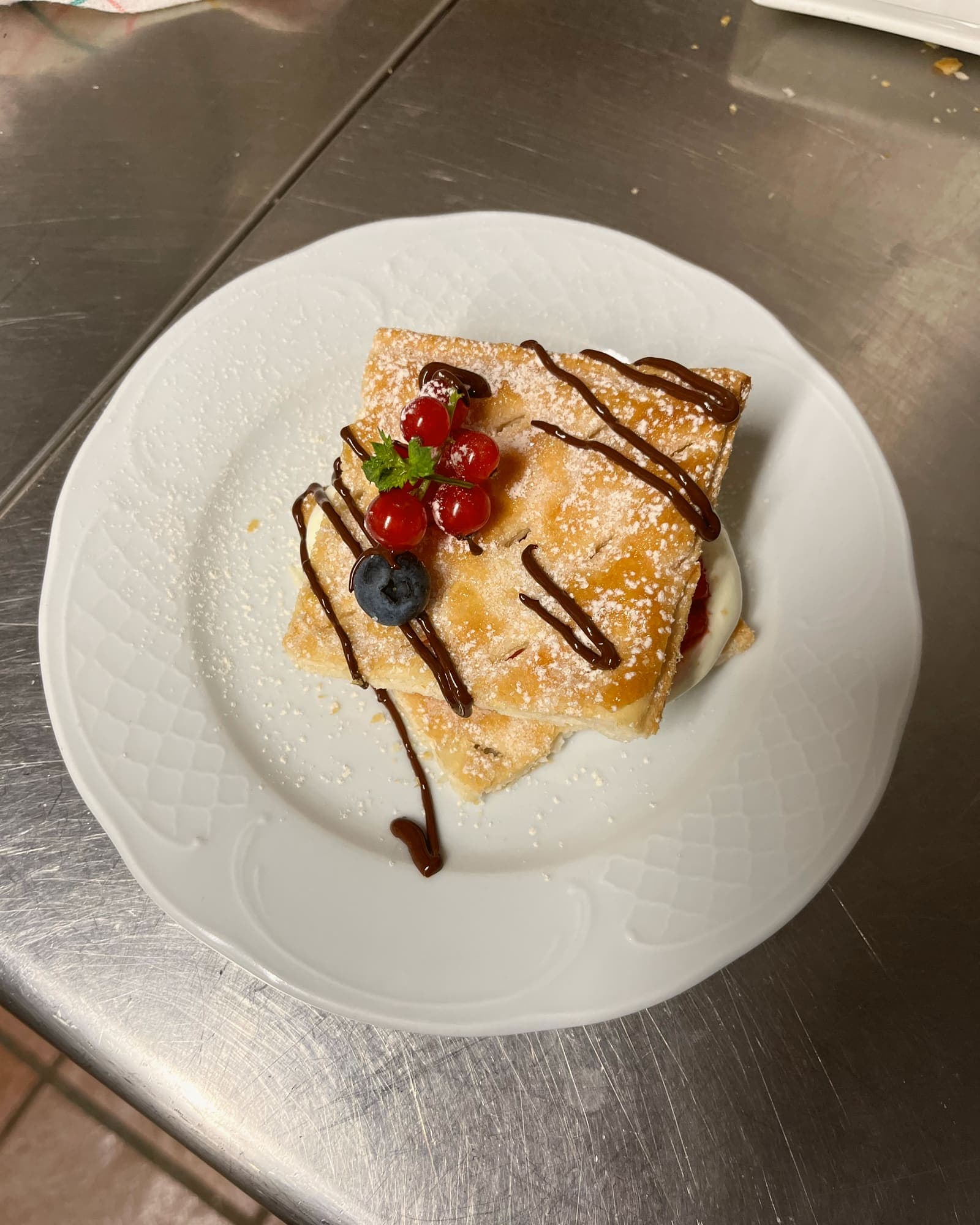
Seven things you can make, and you choose two or three
The list is seven: tiramisù, cantucci and frollini, crostate, torta caprese, babà, brioche and panna cotta. You choose two of them or three, and the number is the only thing that changes the price. These are the desserts Italians make at home, not the ones in a pastry shop window.
Seven desserts
- Cantucci e frolliniThe almond biscuits, and the shortcrust the other household biscuits come from.
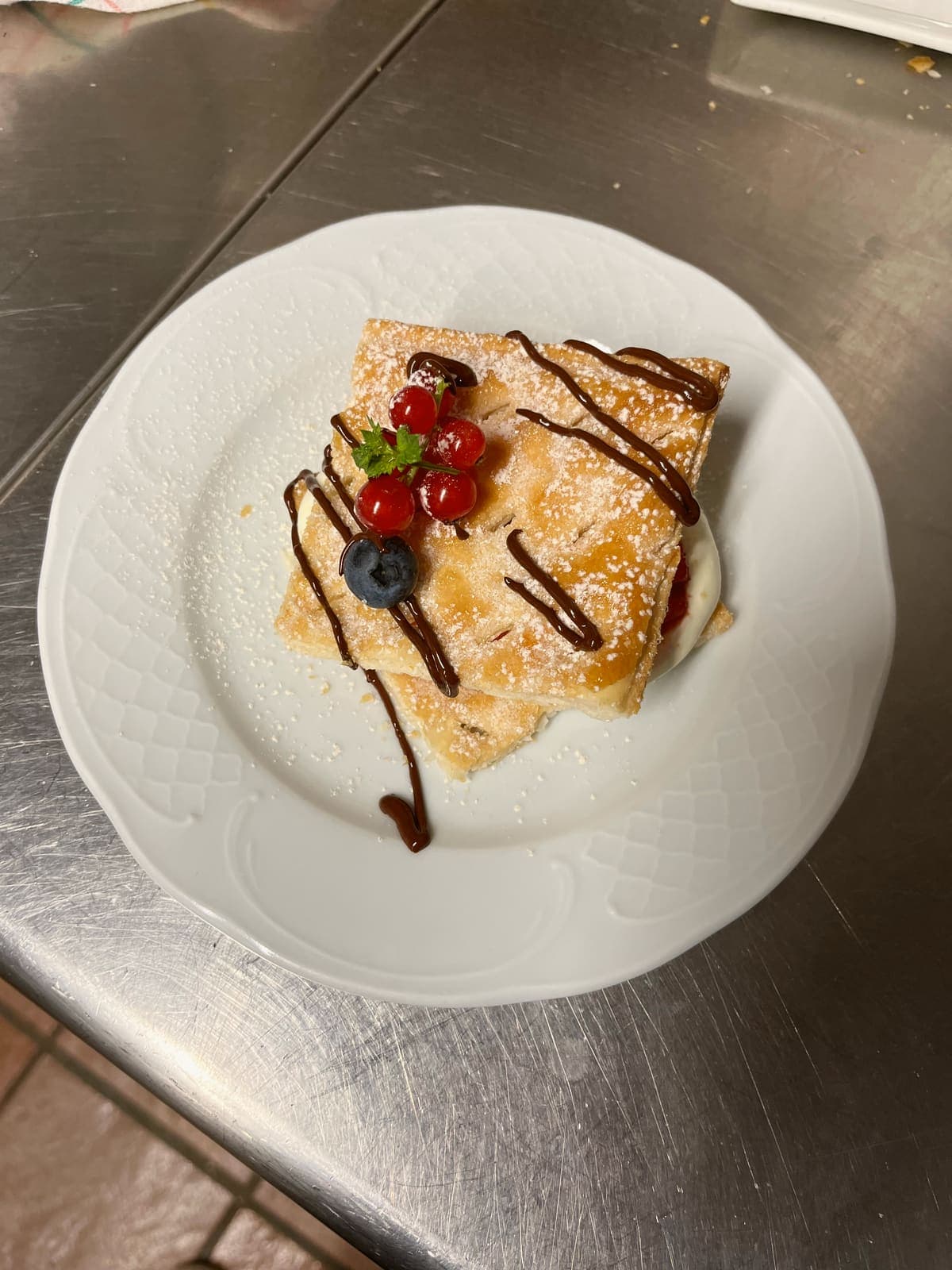
- CrostateOne shortcrust and three ways to finish it: fruit, jam or chocolate.
- Torta capreseAlmond and chocolate cake made without flour, with a thin crust on top.
- BabàThe leavened Neapolitan dough, baked and then soaked in syrup: it is all a question of time.
- BriocheSweet leavened doughs in several shapes: the ones that ask for the longest wait.
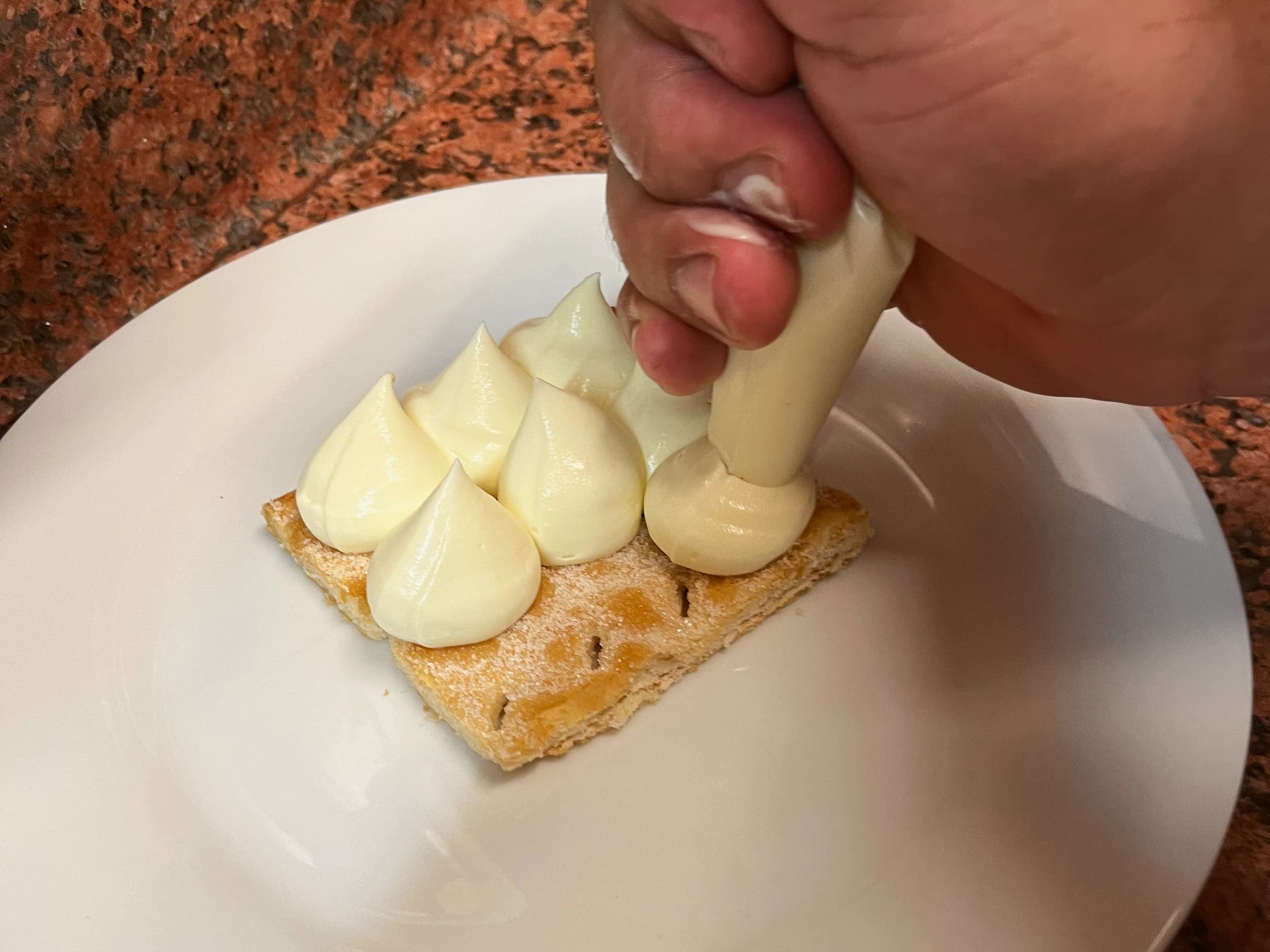
- TiramisùSavoiardi biscuits, coffee, mascarpone cream, cocoa: assembled in front of you.
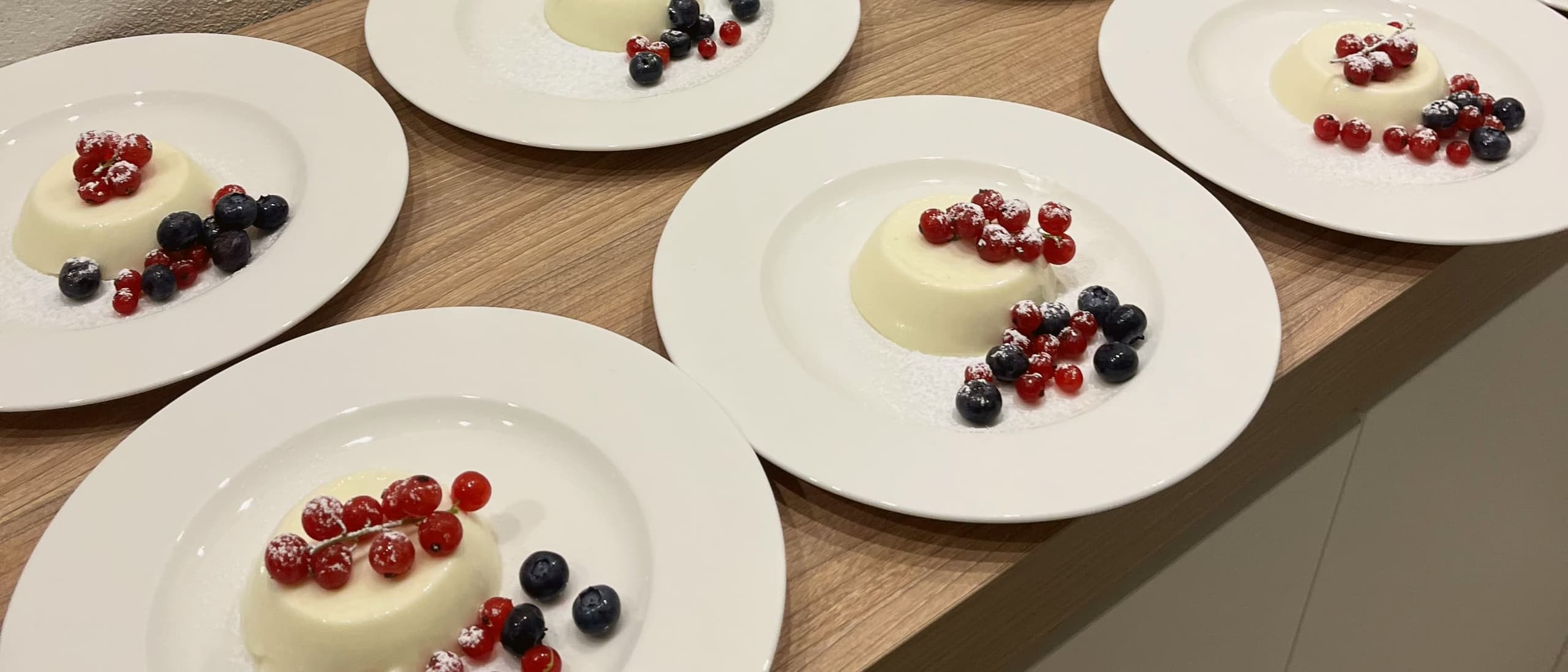
- Panna cottaBarely set cream: no oven at all, only the time the fridge needs.
You choose the class, then how many preparations to make, two or three, then which ones. With three desserts you take more home, and the choice inside the list is free. The number is the only thing that changes the price; which ones you pick does not change it. Preparations are not mixed between classes: these are three separate experiences, and pasta and tiramisù do not get combined into one class. If you want both, they are two bookings.
What you actually learn
The lesson here is that quantities are weighed and not judged by eye, and the rest follows from it. You learn how cold the butter has to stay and how little a shortcrust can be worked, that savoiardi are dipped and not drowned, and that a panna cotta stops wobbling when there was too much gelatine. Half of it is timing rather than skill: what the oven does, and what the fridge does.
Tiramisù, crostate, cantucci: the desserts Italians make at home.
These are the desserts Italians make at home, not the ones in a pastry shop window. Seven preparations, and you choose two or three. There is tiramisù, which everyone believes they know and almost nobody has seen properly assembled. There are cantucci and frollini, which bake, cool and go home in a paper bag. Crostate, with fruit, with jam or with chocolate, which are one shortcrust pastry and three ways of finishing it. Torta caprese, babà and brioche, which ask for patience and an oven. And panna cotta, which wants no oven at all and only the time the fridge needs. Everything is included: Roberto buys and brings all the ingredients for the lesson. Everyone has their own station and their own apron. Children work at a station with an adult, and knives, flame and oven stay with the adults: that is why this is the class that works best with families.
Tiramisù, made properly
Everyone has eaten tiramisù and almost nobody has eaten one assembled that afternoon. The difference is immediate: the mascarpone cream is whipped in front of you, the savoiardi are dipped rather than drowned, and the cocoa goes on last. No oven is involved, only the fridge and a little patience.
Cantucci and frollini, the biscuits that travel home
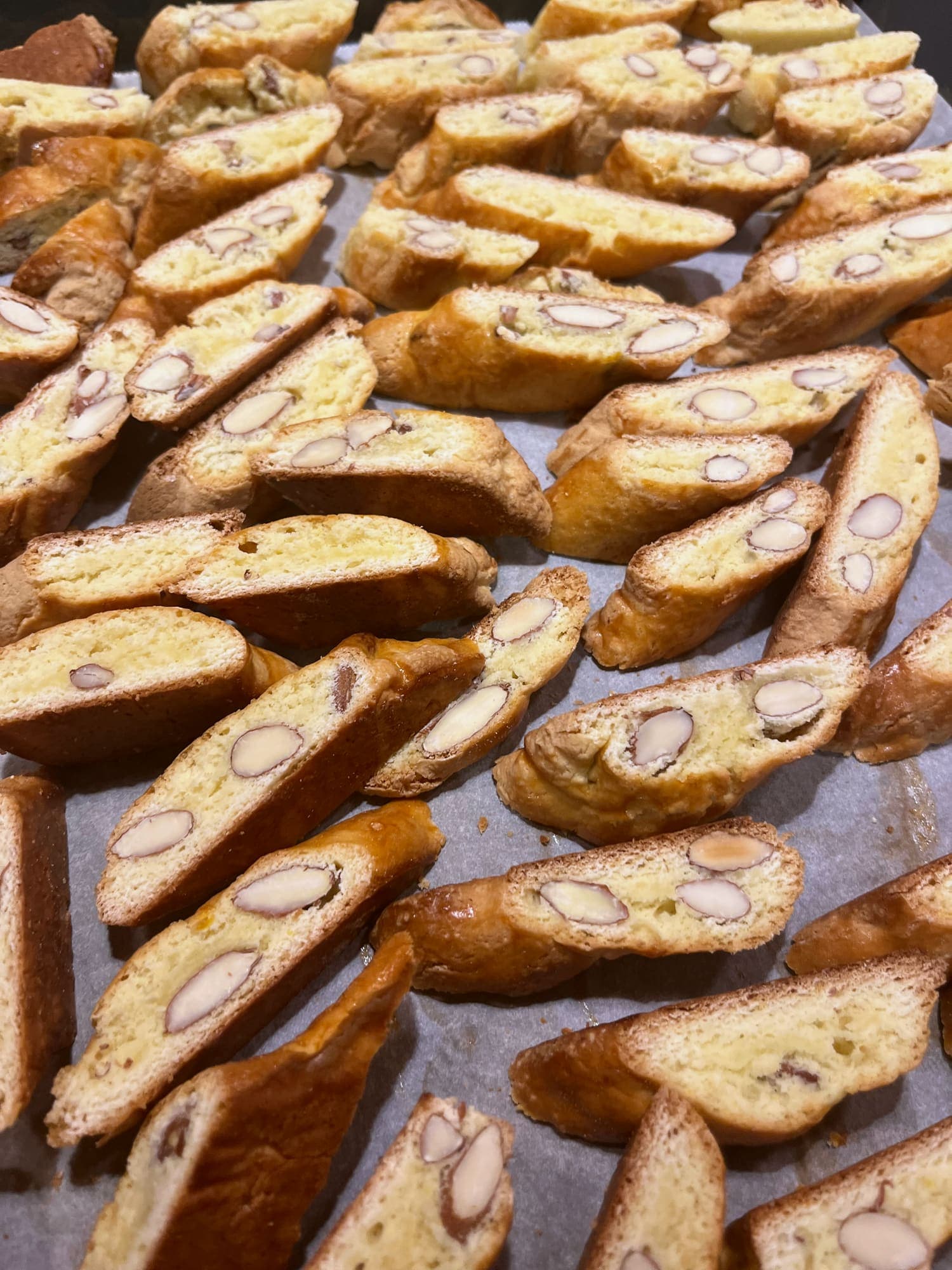
Cantucci are the almond biscuits Tuscans dip in vin santo; frollini are the shortcrust the other household biscuits come from. They bake, they cool, and they go home in a paper bag, which makes them the one thing from this class that outlives the holiday by a week.
Crostate: fruit, jam or chocolate
One shortcrust pastry and three ways to finish it. The pastry is the lesson: how cold the butter stays, how little you work it, why a crostata goes sandy if you knead it like bread. Then you choose the filling, and that part is a matter of what you like.
Torta caprese, babà, brioche: the ones that need patience
Torta caprese is an almond and chocolate cake made without flour, with a thin crust that cracks as it is cut. Babà is the Neapolitan leavened dough, baked and then soaked in syrup. Brioche are sweet leavened doughs in several shapes. All three want an oven and time, and time is what the third stage is for.
Panna cotta
Cream, sugar and the time the fridge needs. It should wobble when the plate goes down, and if it does not, there was too much gelatine: that is the entire lesson, and it takes about ten minutes to learn. Like tiramisù, it needs no oven at all.
How the afternoon goes: the four stages
3 hours
The class itself lasts about three hours: that is the part you are actually in. The chef is in the house longer than that, about six hours in total: he arrives in the afternoon and prepares before you start, and afterwards he clears the kitchen and the equipment he used. You do not need to be there for those hours, and they do not cost you anything extra.
Four stages, and this is the one where the wait comes twice: something goes into the oven, something else goes into the fridge. The order matters because of it, and Roberto sets that order with you before anyone starts. It leaves real pauses between one job and the next, which is part of why this is the class that works best with children. About three hours in all.
Introduction: quantities are weighed
Roberto explains the thing that matters more than the recipe in pastry: quantities are weighed, not judged by eye. You look together at the two or three things you chose and at the order that makes sense for them.
Preparation: doughs, creams, the sweets you chose
You whisk, you mix, you roll. The shortcrust for the crostate, the eggs for the tiramisù, the long dough of babà and brioche: everyone at their own station, with their own scales and their own bowl.
The wait: the fridge and the oven
Here the wait comes twice: there is the oven, and there is the fridge. Tiramisù and panna cotta need nothing but cold and time; cantucci, crostate, caprese, babà and brioche need the oven in the house, which we check before confirming.
Tasting: sitting down, with coffee
You taste what is ready, sitting down, with coffee. The biscuits cool and go with you; whatever is left over stays with you, in the house.
What you eat at the end
You taste what is ready, sitting down, with coffee. The biscuits cool and go with you; whatever is left over stays with you, in the house.
What you need to know before booking
You get your own station and your own tools, an apron for the afternoon, and a chef's hat to keep. The recipes are printed and yours to take: the ones you made that day, with the proportions that actually work written down.
No experience is needed and there is no minimum age. Children do everything the others do, helped by Roberto and their parents; knives, the hob and the oven stay with the adults.
At the end Roberto signs a certificate of participation for each of you. It states that you were here and what you did. It is not a professional qualification and it does not certify skills.
From 2 guests
Up to 25 guests
More than 25? Send a personal request: Roberto reads it and answers himself.
What it costs: two or three preparations
from€100 per person
Minimum €500
| 2-4 | 5-8 | 9-16 | 17-25 | Minimum | |
|---|---|---|---|---|---|
| Two preparations | €155 | €125 | €110 | €100 | €500 |
| Three preparations | €170 | €140 | €125 | €110 | €500 |
Two preparations
2-4 guests€1555-8 guests€1259-16 guests€11017-25 guests€100Minimum€500Three preparations
2-4 guests€1705-8 guests€1409-16 guests€12517-25 guests€110Minimum€500
You choose the class, then how many preparations to make, two or three, then which ones. The number is the only thing that changes the price, and the service minimum is the same for both rows.
The price includes menu planning, preparation at the villa, the class, and cleaning of the kitchen and equipment used. Everything is included: Roberto buys and brings all the ingredients for the lesson. Drinks, wine, flowers, rentals and table styling are separate. When requested, we can introduce an independent local supplier who will confirm their own price, terms and invoice directly with you.
The questions we get asked about the pastry class
- Do we need an oven?
- For crostate, cantucci, torta caprese, babà and brioche, yes. Tiramisù and panna cotta use no oven at all, only the fridge. Before confirming we ask for photographs of the kitchen and a few facts about the oven, the hob and the fridge space, so we know what is realistic in your house.
- Is this the right class for children?
- Yes, and it is the argument for choosing this one. No minimum age, and children do everything the others do, helped by Roberto and their parents; knives, the hob and the oven stay with the adults. Children pay the full rate in a class, because each person has their own station, ingredients and attention.
- How long does it rest in the fridge, and what do we do meanwhile?
- Resting is the third of the four stages, and here it comes twice: the oven for some things, the fridge for others. Meanwhile the second preparation gets started, and people sit down. The class runs about three hours in all.
- Do we take the biscuits home?
- Yes. The biscuits cool and go with you, and whatever else is left over stays in the house. The printed recipes and the chef's hat go home with each person, along with a certificate of participation.
- Is it only dessert, or do we eat something else?
- What you taste at the end is what you made. Depending on the dessert, Roberto may put a cream or something else alongside it, the way he shows sauces in the pasta class, or make a Neapolitan espresso and show you how it is pulled. That is something he offers on the day, at his discretion, not part of what you are buying.
- Can we do this on the same day as a dinner by Roberto?
- No. Roberto takes one main service a day, so a class and a dinner are two different days. Both fit comfortably in the same stay, and you book them separately.
- Is tiramisù always one of the choices?
- Yes. It is on the list every time, and it is the one preparation we commit to keeping there.
Book this class
The other two classes