
Can we book a cooking class in our rented villa? What to ask the owner, and what the kitchen needs
This page covers what to ask, a message you can copy, and what each of our three private cooking classes in Tuscany needs from your kitchen.
Why do some villa owners say no?
Rental agreements often limit who may enter the house and who may cook in it. People who have rented villas in Tuscany say on public travel forums that many owners do not allow outside chefs or unregistered guests, and that some keep a list of chefs they have already approved. Your agreement should say which case applies to you.
For the owner it is a fair rule: the house, its equipment and everyone inside it are theirs to answer for. A polite question in writing, sent before you book, settles it for both sides.
What should you ask the owner or manager before you book?
Ask whether outside chefs and classes are allowed under your rental agreement, whether the villa has an approved list or a form to fill in, which days and hours suit the owner, and who may be in the house besides the registered guests. Here is a message you can copy and adjust.
Hello [name],
We are staying at [villa] from [date] to [date]. We would like to book a private cooking class in the kitchen one afternoon: a chef comes to the house with the ingredients and teaches us to cook. The class lasts about three hours, and the chef is in the house for about six hours in all, because he arrives in the afternoon to prepare and clears the kitchen afterwards.
Before we book, could you tell us:
- Does our rental agreement allow an outside chef to come to the house?
- Do you keep a list of approved chefs, or is there a form we should fill in?
- Which days and hours suit you?
- Can friends who are not staying here join us, or only registered guests?
- Is there anything about the kitchen, the oven or the outdoor tables that we should know?
Thank you,
[your name]
Do not assume the owner or manager already knows about the class. From experience, Roberto's advice is to ask before you book, not after. It also matters for the booking itself: when you book, you accept our terms and conditions, and in them you confirm that Roberto may lawfully come into the villa, that you have the owner's permission where it is needed, and that using the kitchen is allowed. Getting that permission is your responsibility, which is one more reason to ask early.
If the owner or manager would rather speak to the chef, send them our contact page: Roberto answers within one working day. If they ask for documents about the service, professional and food-safety documentation is available on request.
What does the kitchen need for each class?
Before confirming the booking, we ask a few practical questions and may request photographs of the kitchen: the stovetop, oven, refrigeration and available work space. A professional kitchen is not required. Knowing the space in advance allows Roberto to plan the work in that kitchen and decide what equipment to bring.
The first thing Roberto looks at in a kitchen is the space to prepare in. Then he looks at the tools and the appliances, and at whether the stovetop is induction or gas. Each class then asks for something a little different.
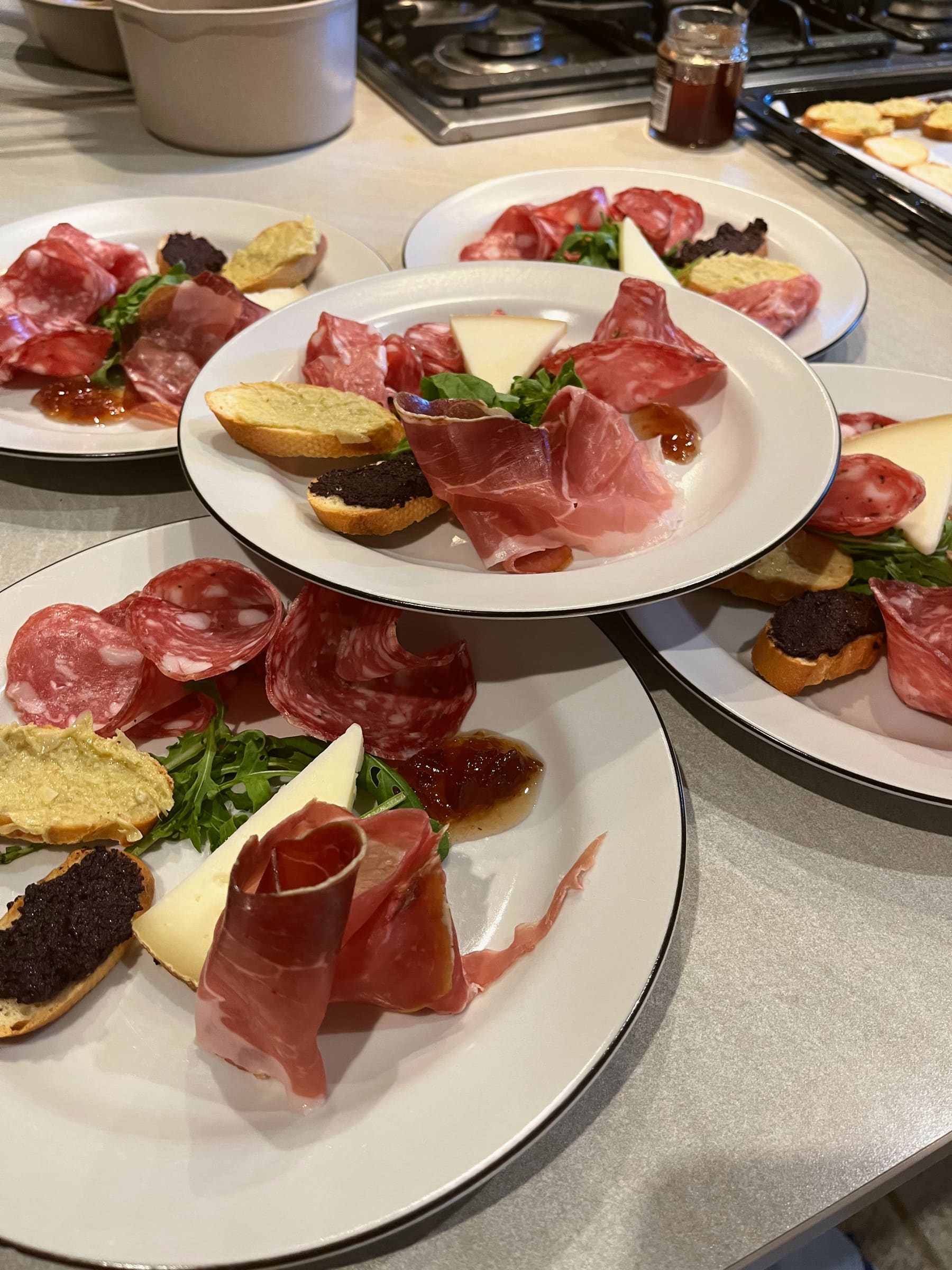
The pizza making class, Pizza e Fuoco
In the pizza making class the oven in the house decides which pizza you make. You do not need a wood-fired oven: a tray pizza forgives a domestic oven, while a round one wants heat concentrated in one place. We look at the photographs and tell you before confirming which of the two you will be making. The pizze fritte need the stovetop, with the oil at the right temperature and the pan watched. The dough is made right there in your kitchen, and it proofs at its own speed: proofing cannot be rushed, so the class has a wait built in.
The fresh pasta making class, Mani in Pasta
In the fresh pasta making class, a single countertop is enough, as long as it is big enough for everyone to work at it. Pici, orecchiette and gnocchi are made entirely by hand. At the end you need the stovetop, because fresh pasta cooks in a couple of minutes and is eaten the moment it is ready.
The tiramisù and Italian pastry class, Dolci di Casa
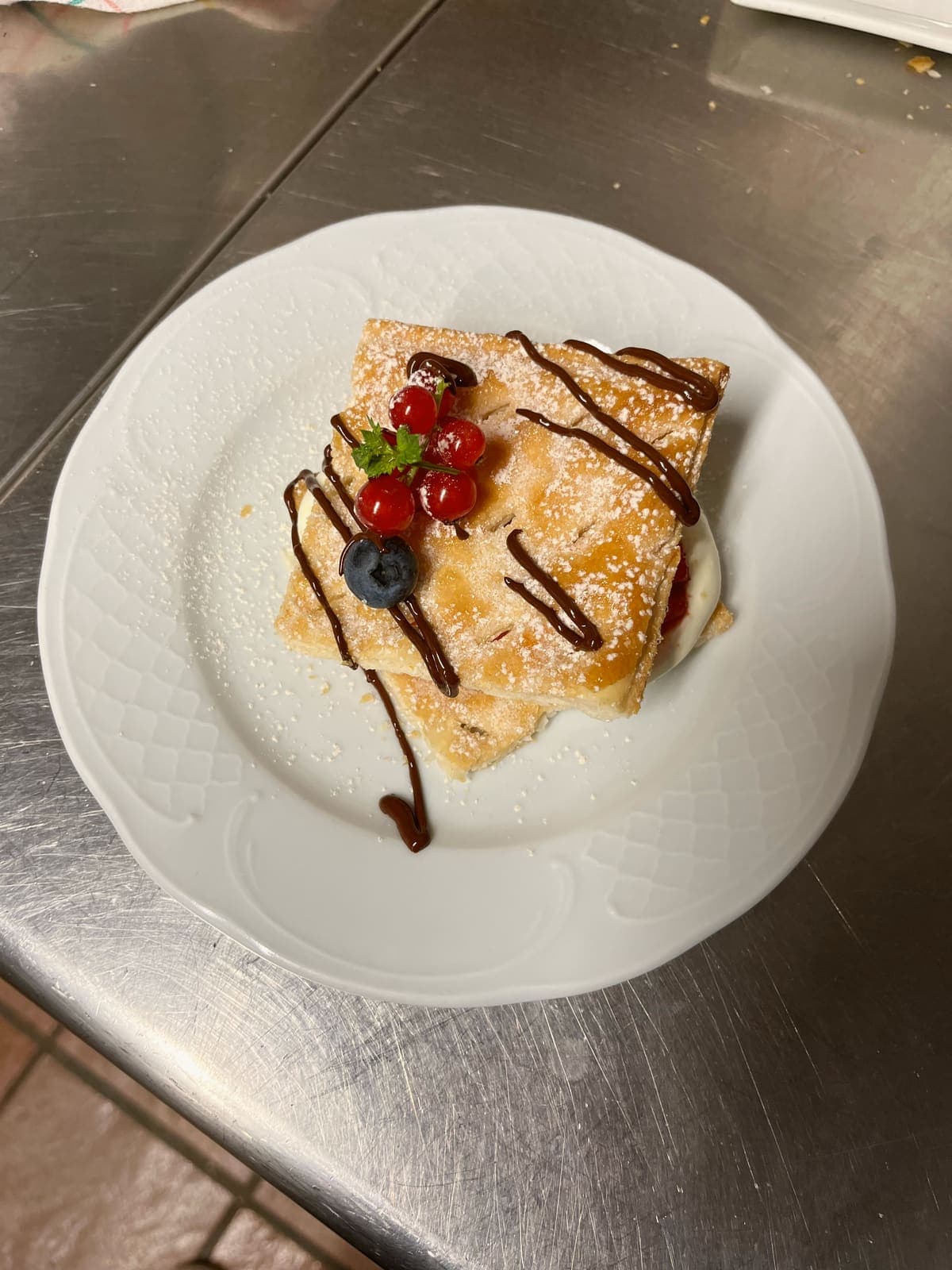
The tiramisù and Italian pastry class is the one where both the oven and the fridge matter, because the wait comes twice. Tiramisù and panna cotta need nothing but cold and time. Cantucci, crostate, torta caprese, babà and brioche need the oven in the house, which we check before confirming. For this class, ask yourself two things about the kitchen: does the oven work, and is there room in the fridge for what has to rest?
If you would like to cook outside, it often works, provided there is a stable work surface, shade, power and suitable weather. We agree the set-up with you in advance and keep an indoor option open. Mention the outdoor tables in your message to the owner.
How many people fit in a villa kitchen?
It depends on how big the table or countertop is, so there is no fixed number. Each guest has a working place, and Roberto goes to each guest, one station at a time, when it is that guest's turn to cook. If one countertop is not enough, he divides the class into stations. Classes start at two guests, and the booking page shows the maximum for each class.
What does Roberto bring, and what is left for you?
Roberto brings the ingredients, the stations, the tools and the pasta machine. You provide the kitchen, and before confirming we ask for a few photographs and three practical facts: the stovetop, the oven, the space in the fridge. In cooking classes everything is included: Roberto buys and brings all the ingredients for the lesson.
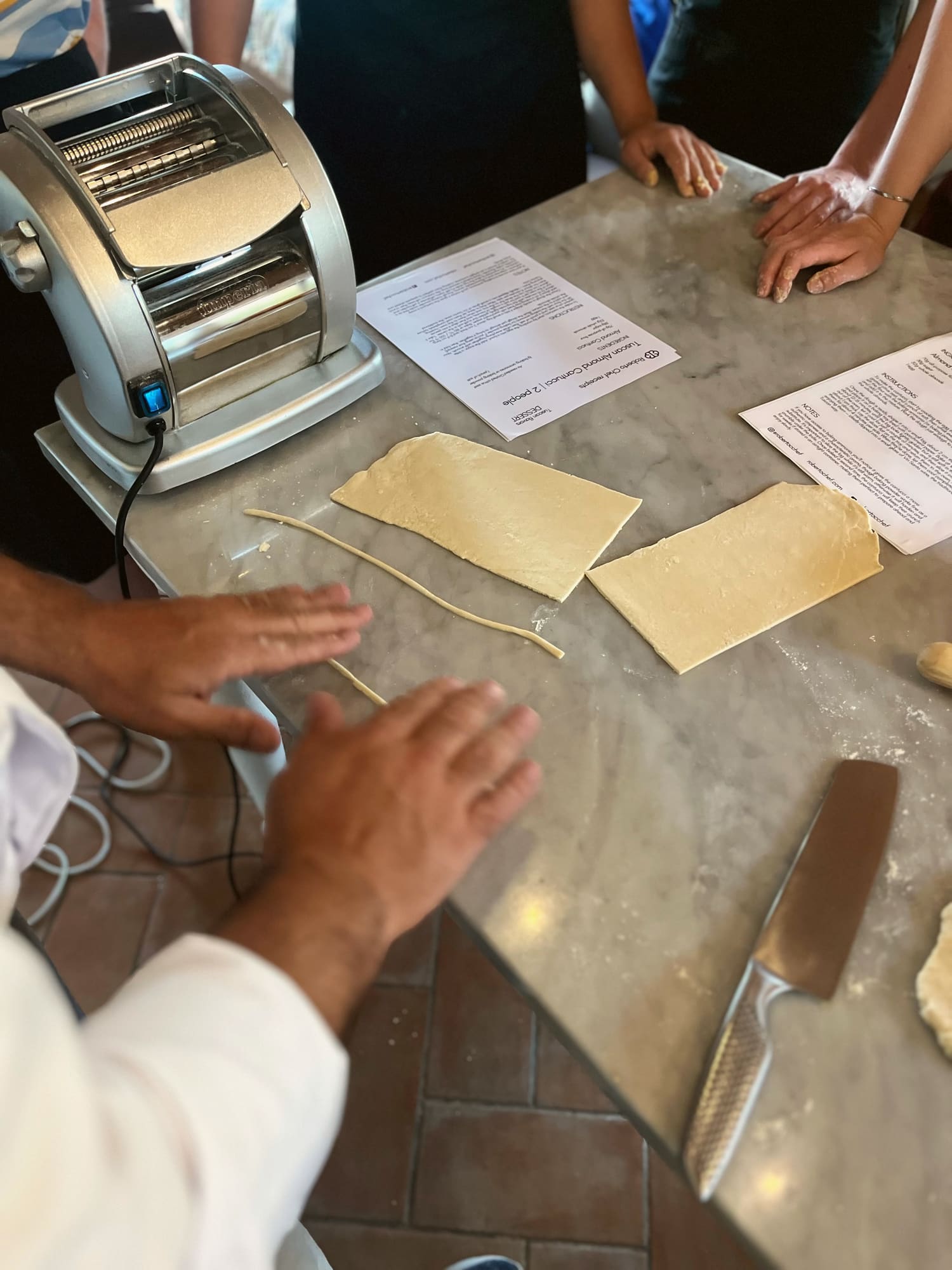
The class itself lasts about three hours. Roberto is in the house longer, about six hours in total: he arrives in the afternoon and prepares before you start, and afterwards he clears the kitchen and the equipment he used. You do not need to be there for those hours, and they do not cost you anything extra.
Each guest wears an apron during the class: it is for the class only. The chef's hat, the printed recipes for what you made and a certificate of participation, which records that you took part and is not a qualification, are yours to keep, and whatever is left over stays in the house with you. What a class costs, and what the price covers, is on our costs page.
Is it the same for a private dinner?
A dinner raises the same questions: the owner's permission, the stovetop, the oven and the fridge. We ask the same practical questions before confirming, and the message above works with "dinner" in place of "class". The dinners have their own page: private chef dinners in Tuscany.
What if you own or manage the villa?
If your guests ask you about classes or a private chef, there is a page written for you, with public prices and written terms: for villa owners and managers.
Common questions
Do we need a wood-fired oven?
No. We work with the oven that is already in the house, and that is what decides whether you make pizza al piatto or pizza in teglia. Before confirming we ask for photographs of the kitchen and a few practical facts about the stovetop, the oven, the fridge and the countertop.
Can children join?
Yes. There is no minimum age. Children do the same things as everyone else, with more help from Roberto and from their parents. Knives, stovetop and oven are for adults only. In a class children pay the full rate, because each person has their own station, their own ingredients and their own share of the attention. Tell us their ages when you book.
How long does it take?
The class lasts about three hours. Roberto is in the house about six hours in all, because he arrives in the afternoon to prepare and clears the kitchen afterwards.
Who tidies the kitchen afterwards?
Roberto does. The price includes cleaning of the kitchen and equipment used, and he leaves the working area in order.
Who wrote this
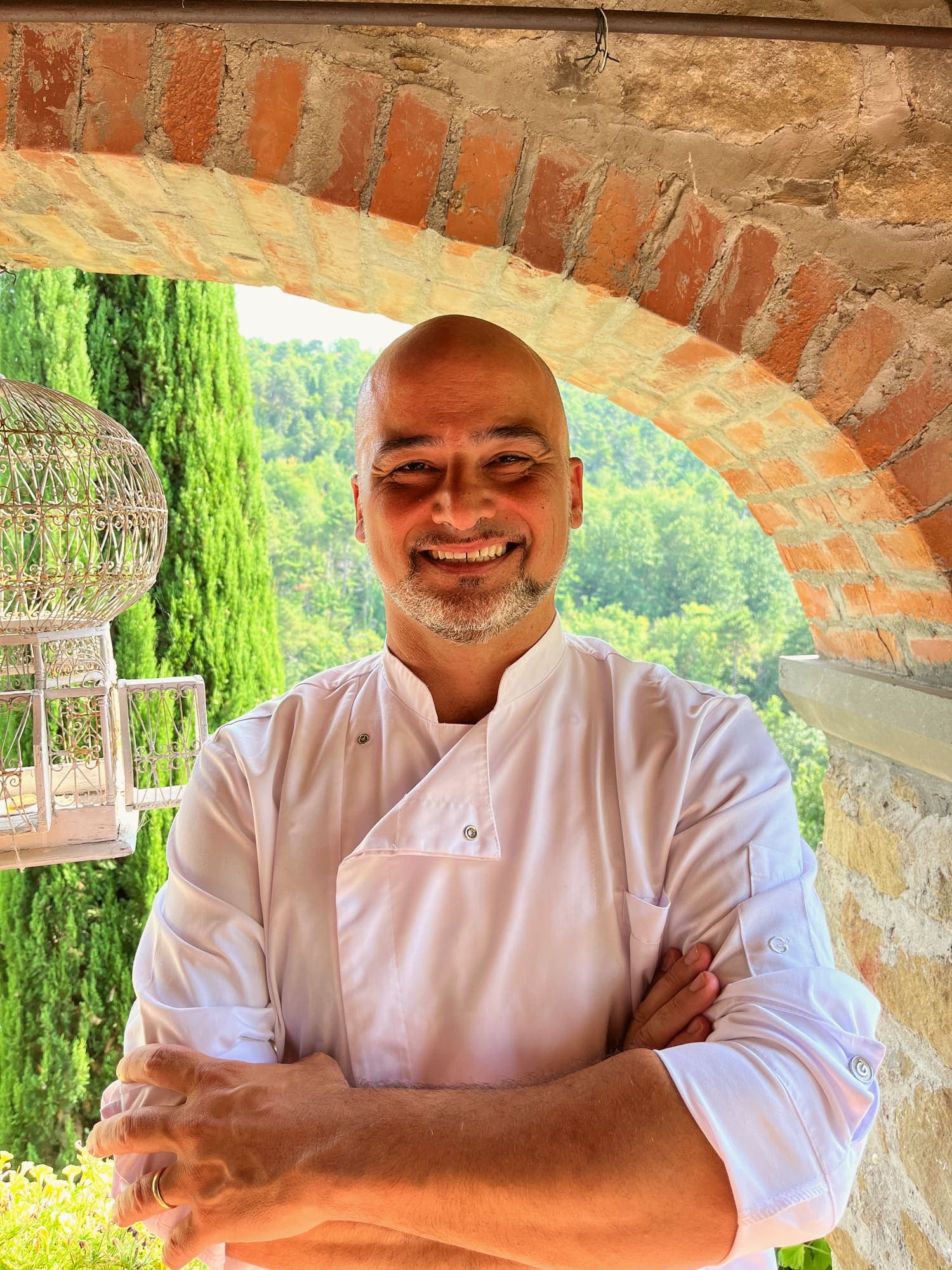
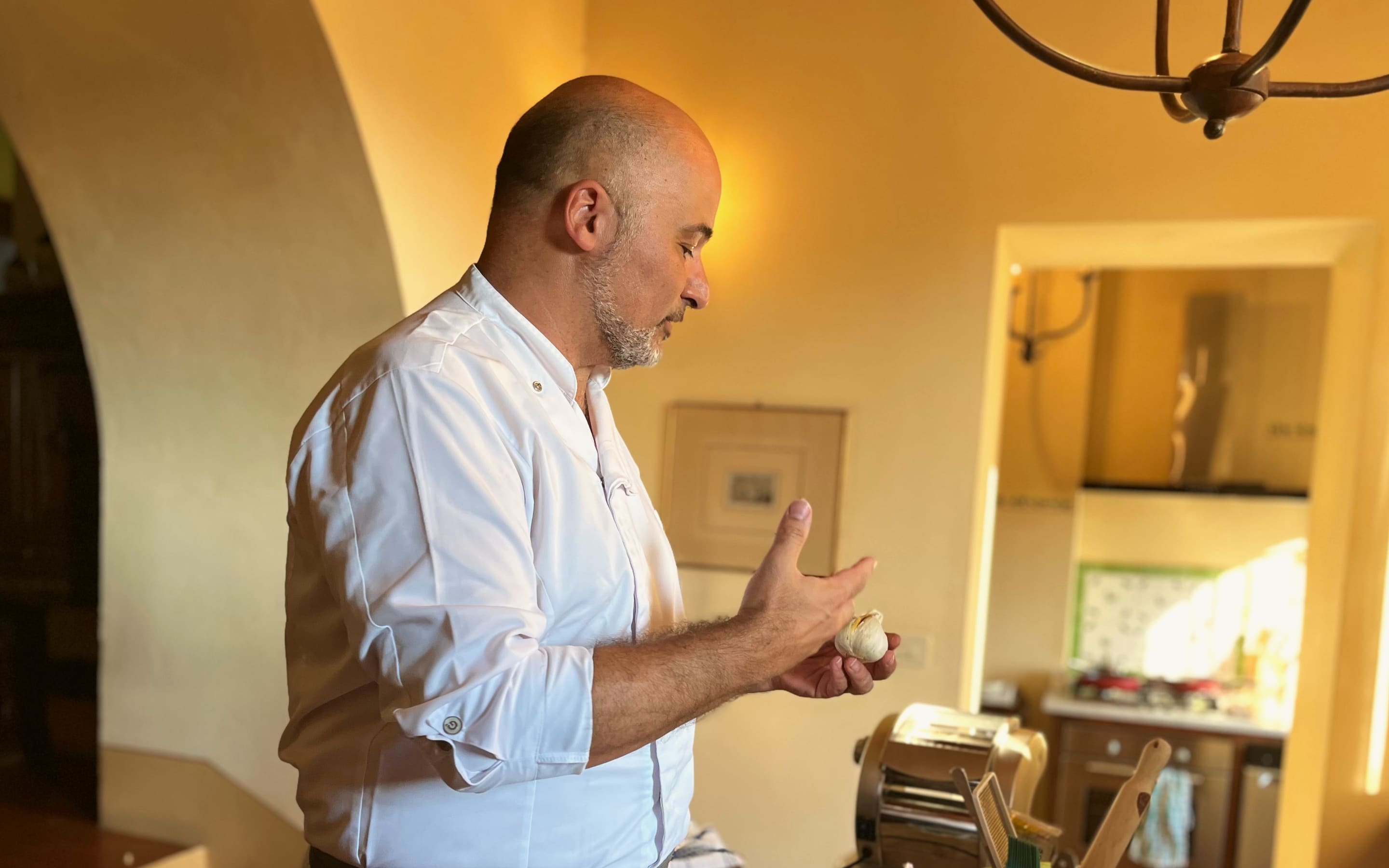
Roberto Parato is a chef and cooking teacher. In professional kitchens since 1994, he was executive chef of the five-star Grand Hotel Continental Siena and the Park Hotel Siena. He has taught professional cookery since 2005. Today he cooks in Tuscan villas for the guests staying in them.