A cooking class in your villa or a cooking school in town? An honest comparison
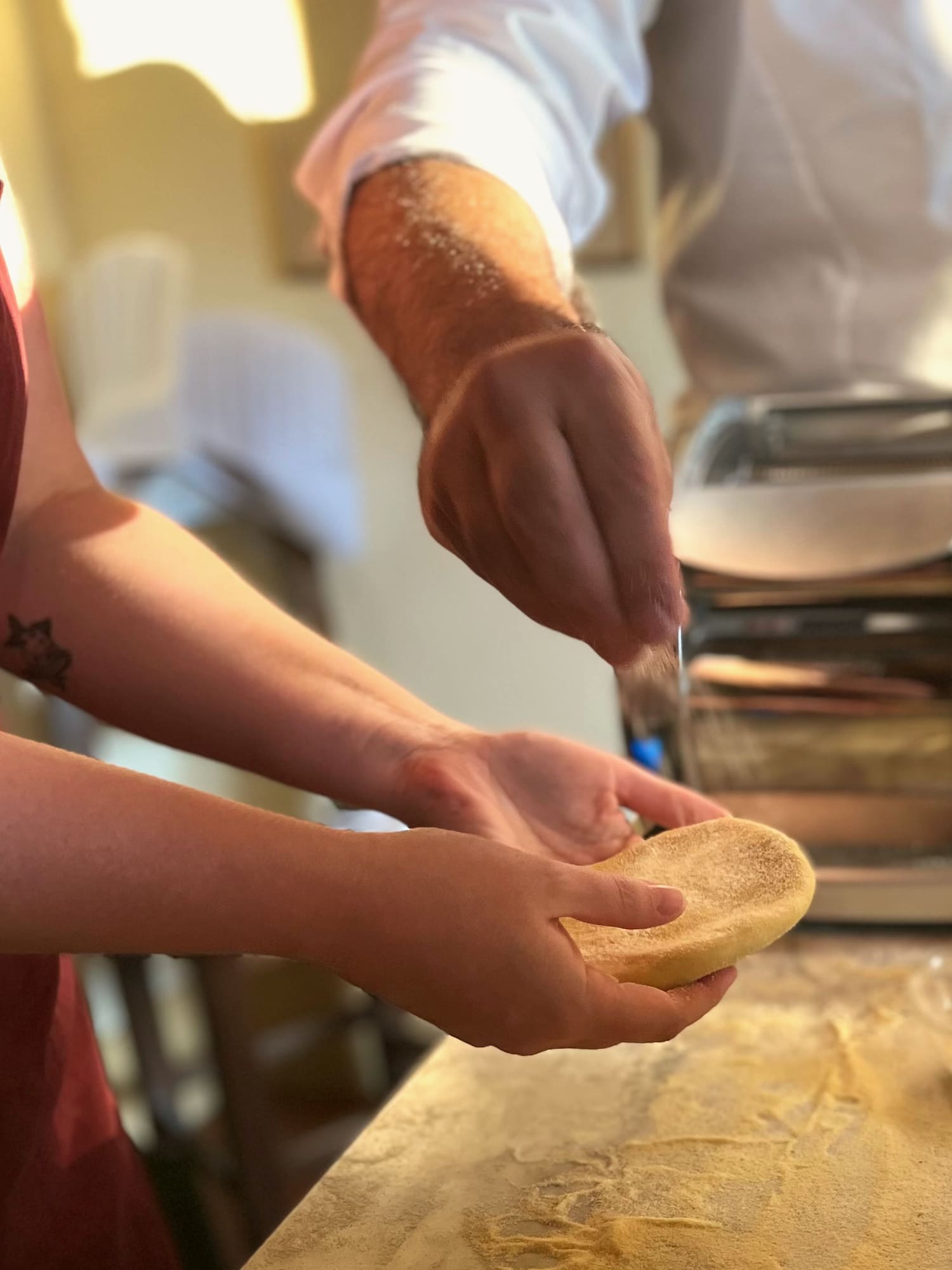
A private cooking class in your villa gives you your own kitchen, your own table and no traveling. Neither is better in general: it depends on what you want from the afternoon, and the choice is yours. The rest of this page says what each one gives you, how a class in your villa goes, and what to know before you decide.
What does a cooking school in town give you?
A school gives you a fixed place, fixed hours and other travelers at the table. You do not need anyone's permission, because it is not your rental, and you leave the villa for an afternoon. A place at a shared table is priced per seat.
Search for a cooking class in a Tuscan town and most of what you find is a school based in that town. For some travelers that is exactly what they are looking for: the classroom atmosphere, or a table shared with strangers from other countries. It is also the simpler booking when the owner of your villa has said no to outside visitors.
What changes when the class comes to your villa?
Only your group is in the kitchen, and the kitchen is yours. There is no traveling to or from the class, nobody has to drive home after the meal, you eat what you made at your own table, and whatever is left over stays in the house with you. Roberto brings the ingredients, the stations and the tools.
You do need the owner's agreement, and getting it is your responsibility. Ask the owner or manager before you book: there is a page on what to ask the owner and what the kitchen needs, and when you book, our terms ask you to confirm that you have the owner's permission where it is needed. Before confirming we ask for photographs of the kitchen and a few practical facts about the stovetop, the oven and the fridge. A professional kitchen is not required.
Which one is better?
Neither, in general: it depends on what you want from the afternoon. A school gives you the classroom and the other travelers. A class in your villa is, in general, the more relaxed of the two, because there is no traveling and no stress about getting there or back. Both are fair choices.
Does the size of the group matter?
It matters for the price. A school prices a seat. A class in your villa is priced per person by group size, with a minimum.
Every experience has a service minimum of €500, the same for all six. It works like this: you pay whichever is higher, the minimum or the sum of the per-person rates. For a group of four or more you will not even notice it, because the rates pass it on their own; for a couple, the minimum is what sets the price. The total is shown before you pay, not after. The per-person rates for each group size are in the cooking class section of our costs page.
With ten people the minimum no longer matters. Each guest has a working place, and when one countertop is not enough Roberto divides the class into stations.
Side by side:
- Where: a school in town is in the school's kitchen; a class in your villa is in your villa kitchen.
- Who is at the table: at a school, other travelers; in your villa, your group only.
- Hours: set by the school, or agreed with you.
- Owner's permission: not needed for a school; for your villa, ask the owner first.
- Price: per seat at a school; per person by group size, with a service minimum, in your villa.
- Getting home: from a school you travel back; in your villa you are already there.
How does a class in your villa go?
The class runs about three hours in four stages: an introduction, the preparation at your own station, a wait while the dough rests, proofs or chills, and the tasting. The rule is the same in all three classes: you cook, then you taste what you made.
Whatever the class, it follows the same order. Everyone wears an apron for the class, and the class opens with an introduction to the pasta or the dish and to its history, and to the ingredients: how they are used and what makes each one different. Then each guest makes it in turn, at their own station, and Roberto goes to one station at a time, correcting what needs correcting and passing on practical tips. At the end everyone receives the printed recipes for what they made and a certificate of participation, and the chef's hat is yours to keep. The apron is for the class only.
Here is the fresh pasta class, stage by stage.
- Introduction. You start from the real proportions: how much flour, how many eggs, and why a dough without egg needs a different hand. Roberto shows the shapes you chose, one by one, and says what makes them different from each other.
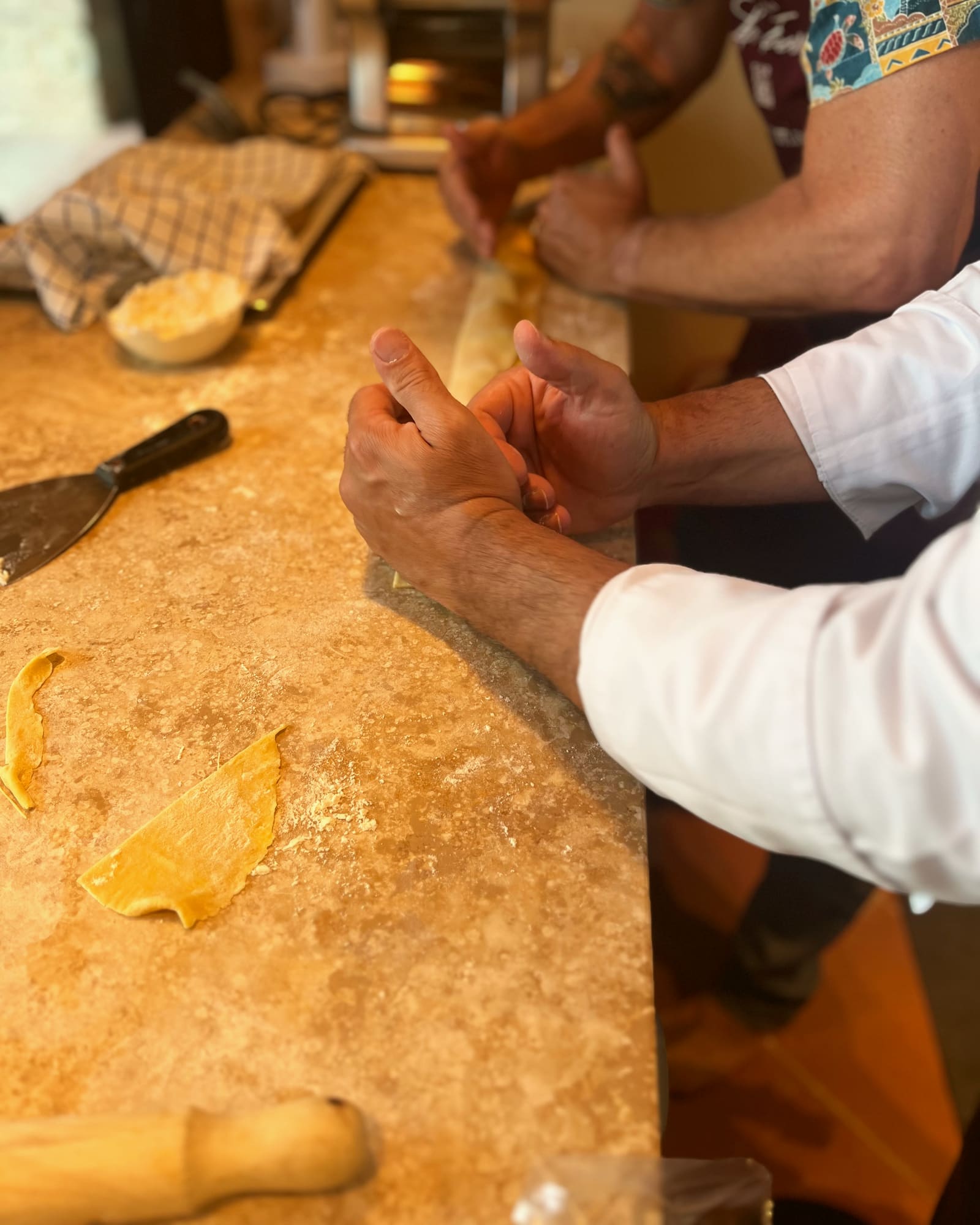
- Preparation. You mix by hand on the countertop, work the dough until the texture changes, then roll it out: with a rolling pin or with the pasta machine, which Roberto brings. Each shape has its own movement, and the movement gets corrected while you are doing it.
- The wait. The dough rests, and that is the moment where everyone sits down and talks. Meanwhile the second shape gets started, and Roberto shows a few of the sauces he usually puts with those pastas.
- Tasting. Fresh pasta cooks in a couple of minutes, so it is eaten the moment it is ready, one shape at a time. You taste the difference between what you made and what the person next to you made. Whatever is left over stays with you.
In the pizza class the wait is the dough proofing, which cannot be rushed. In the tiramisù and pastry class it comes twice, once for the oven and once for the fridge. If you want to sit down to what you made, you are served at the table: there is no separate menu built around the class.
Can children and grandparents join?
Yes. There is no minimum age. Children do the same things as everyone else, with more help from Roberto and from their parents. Knives, stovetop and oven are for adults only. In a class children pay the full rate, because each person has their own station, their own ingredients and their own share of the attention.
Tell us the children's ages when you book. The tiramisù and pastry class, Dolci di Casa, is the one that works best with children. In the pasta class, farfalle are small rectangles pinched one by one, which children can do. With grandparents and children in the same class, everyone makes the same thing.
For grandparents, expect about two hours of active standing work, divided into shorter sections while dough rests, rises or cooks. A seated station can be prepared for a guest who cannot stand comfortably for long; let us know when you book.
Which class should you choose?
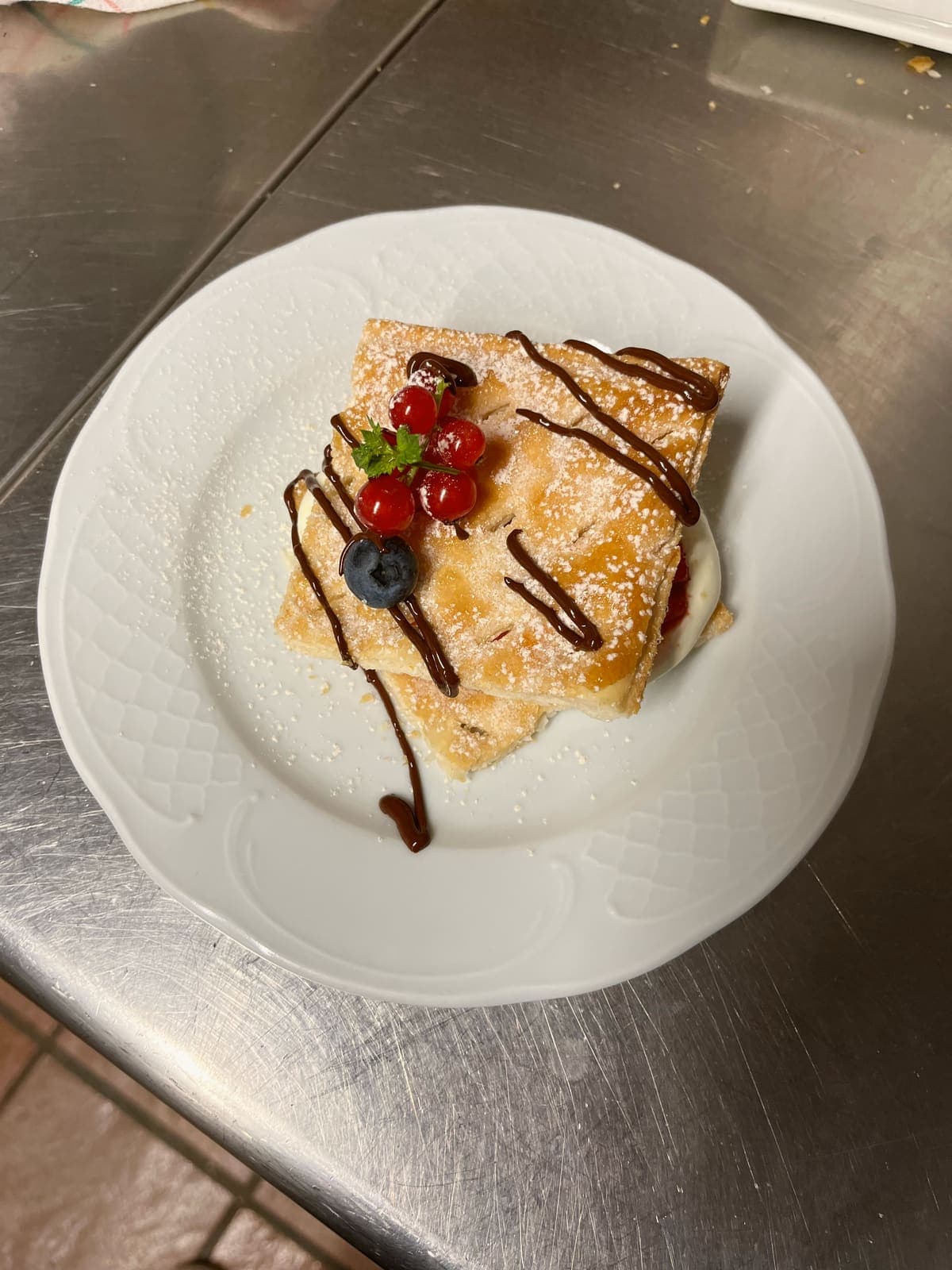
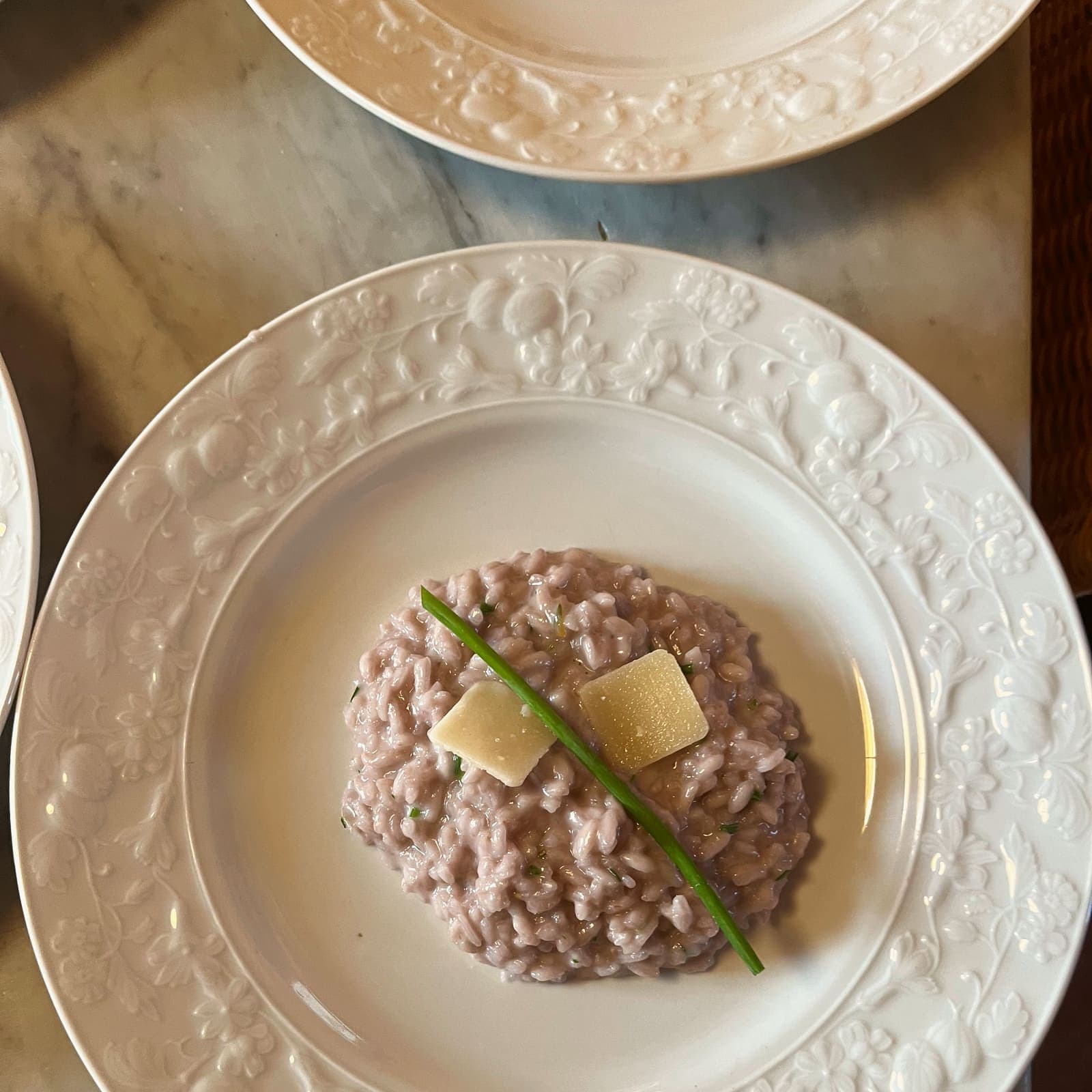
Choose by what you want to cook. The pizza making class, Pizza e Fuoco, is three kinds of pizza. The fresh pasta making class, Mani in Pasta, is fourteen shapes in four families. The tiramisù and Italian pastry class, Dolci di Casa, is seven desserts. In each one you choose two or three preparations.
The three classes are three different things to cook. Nobody is graded, and nobody needs to have cooked before. The number of preparations, two or three, is the only thing that changes the price.
Which areas does Roberto cover?
Roberto holds classes across Tuscany, starting from Siena, and travel is included within a set drive of Siena; the costs page has the exact rule. Six areas have a page of their own, with the local detail:
- Siena, Roberto's home and professional base.
- Chianti, around Gaiole, Radda, Castellina, Panzano and Greve.
- Montepulciano and the Val d'Orcia, including Pienza and Montalcino when the route falls within the published travel rule.
- San Gimignano, in the Val d'Elsa.
- Cortona, and the Val di Chiana.
- Florence, the hills around the city and the Chianti Fiorentino.
Common questions
Is the meal included?
You eat what you made. You cook, then you taste it, and if you want to sit down to it you are served at the table: there is no separate menu built around the class. In cooking classes everything is included: Roberto buys and brings all the ingredients for the lesson. Wine is not included; you may bring your own or ask for an introduction to a local supplier.
Do we get the recipes?
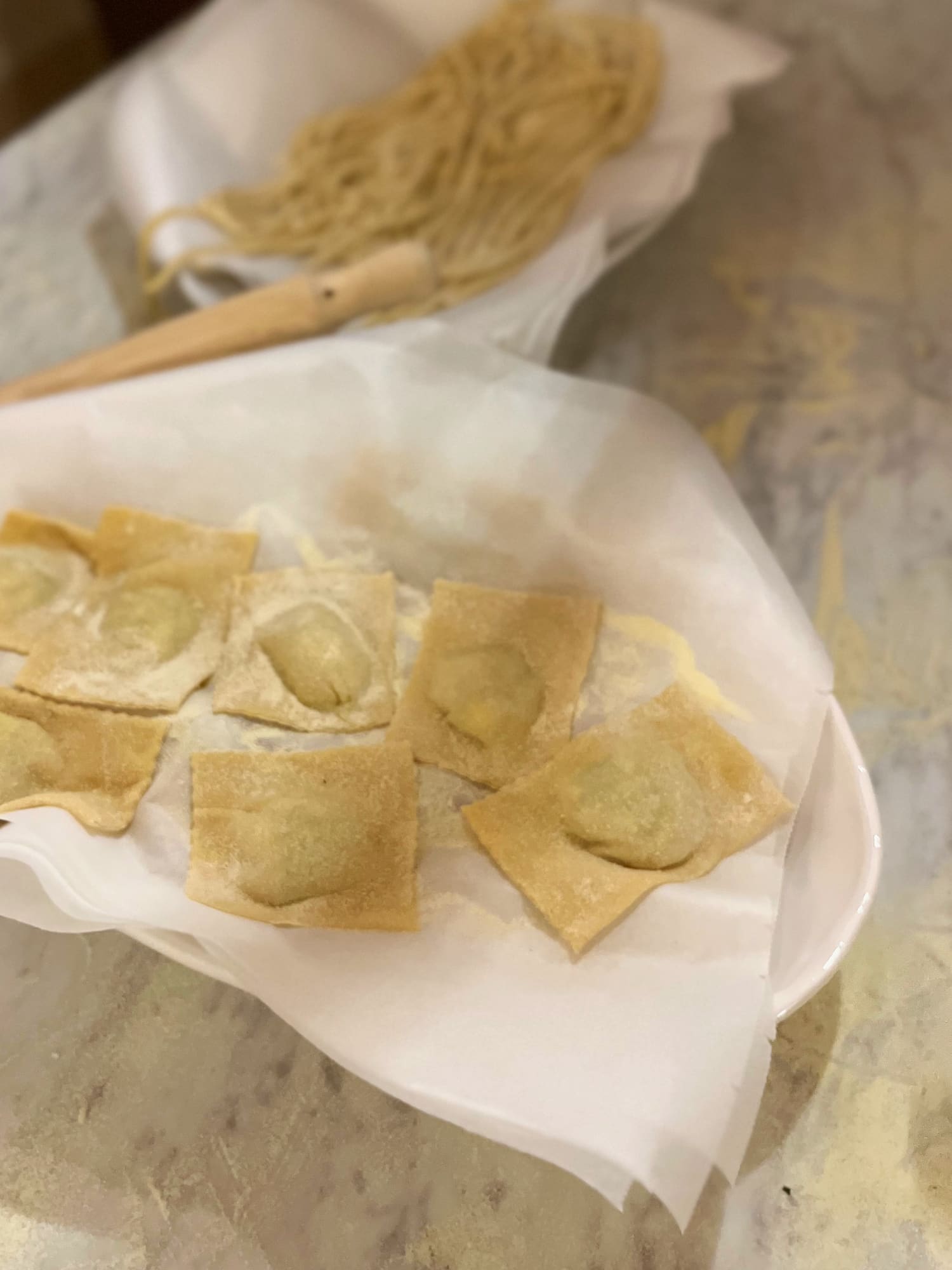
Yes. Everyone receives the printed recipes for what they made and a certificate of participation, which records that you took part and is not a qualification. The chef's hat is yours to keep too; the apron is for the class only.
What if we are only two?
Two guests is the smallest group. For two, the service minimum sets the price, and the total is shown before you pay, not after.
Can we make pasta and tiramisù in one afternoon?
No. They are three separate experiences, so pasta and tiramisù do not get combined into one afternoon. If you want both, they are two bookings on two days, and they fit easily inside one stay.
Who wrote this
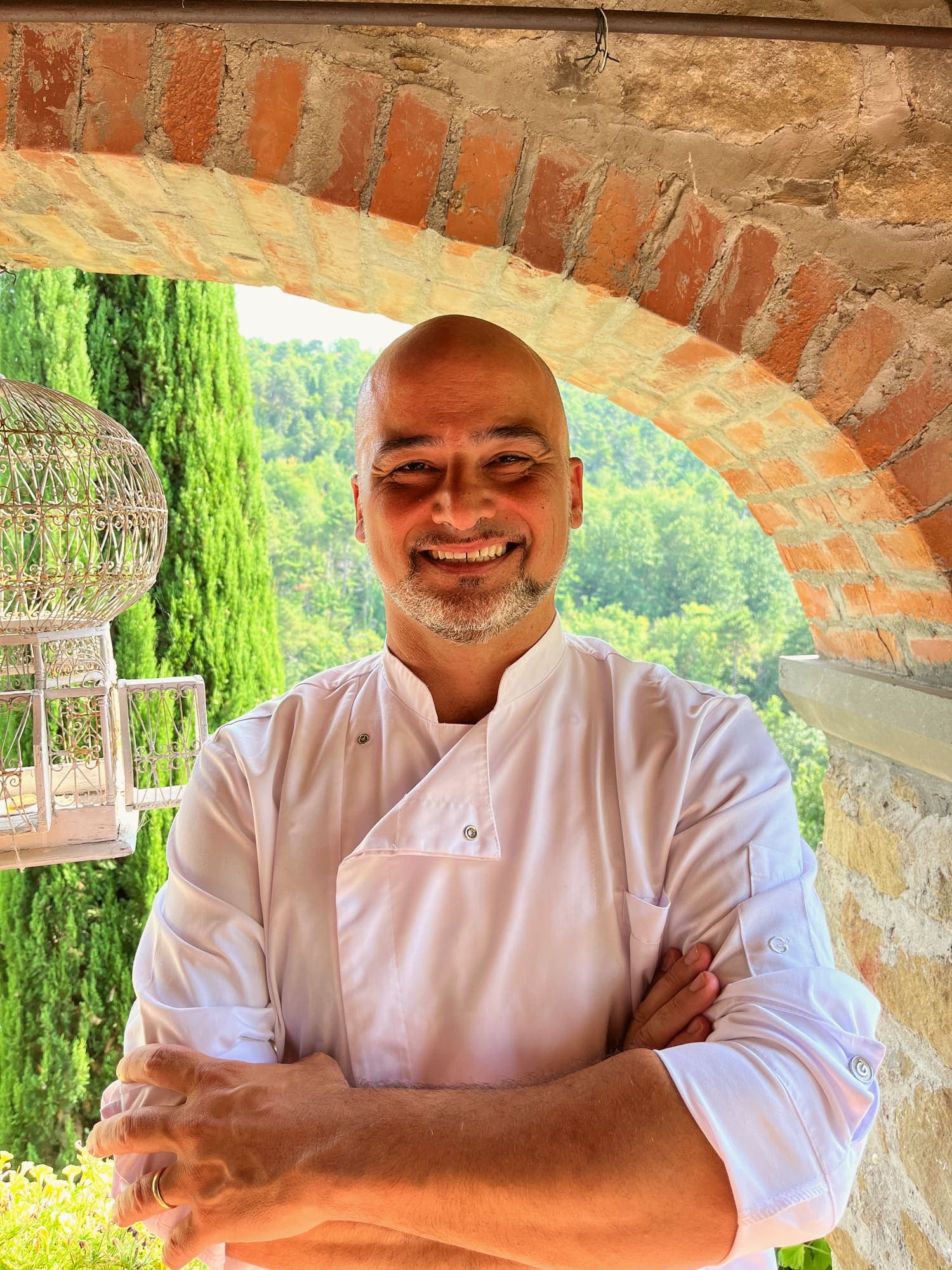
Roberto Parato is a chef and cooking teacher. In professional kitchens since 1994, he was executive chef of the five-star Grand Hotel Continental Siena and the Park Hotel Siena. He has taught professional cookery since 2005. Today he cooks in Tuscan villas for the guests staying in them.